
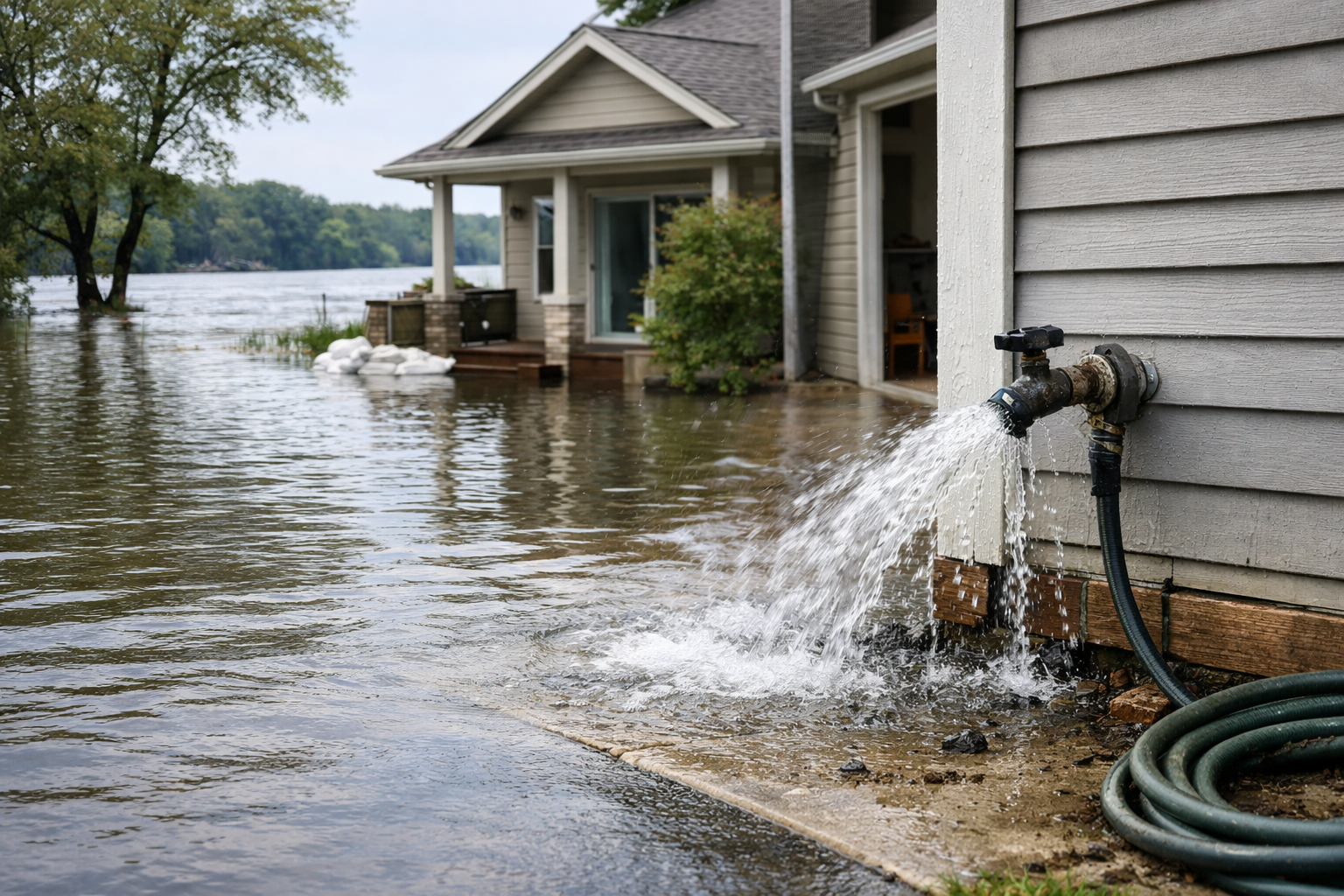
Two feet of water in your basement can be covered by insurance, or it can leave you paying every dollar yourself. The difference comes down to one question: is this flood vs water damage? The answer decides which policy pays, which restoration steps come first, and how fast you need to act.
This post breaks down what separates the two, why insurers treat them as separate damage types, and how each affects the cleanup work that follows. You will finish knowing which category your situation fits and what to do next.
Flood vs Water Damage: The Distinction That Decides Your Claim
Water damage is harm caused by water originating inside your property or from a sudden, accidental source. A burst pipe, an overflowing washing machine, or a leaking water heater all count.
Flood damage is harm caused by rising external water that covers normally dry land. Overflowing rivers, storm surge, and heavy rain pooling across the ground fit this definition.
The origin of the water is what separates them. Water from inside your walls is one category. Water rising from outside and entering your home is another.
Why Insurers Draw a Hard Line
Standard homeowners policies cover many water damage events. They almost never cover flooding.
Flood coverage comes from a separate policy, usually the National Flood Insurance Program (NFIP) or a private flood insurer. If your home floods without that separate policy, your homeowners insurance will likely deny the claim.
This is the trap that catches homeowners after major storms. They assume any water inside the house is covered. The claim gets rejected because the source was external floodwater.
How Insurance Treats Each of These Damage Types
Coverage depends entirely on which category applies. Here is how the two break down side by side.
Water Damage (Standard Homeowners Policy)
- Burst or frozen pipes – usually covered if sudden and accidental
- Appliance overflow – covered when the failure is unexpected
- Roof leaks from storm damage – covered if the roof breach was sudden
- Water heater rupture – covered as an accidental discharge
- Gradual leaks and neglect – usually denied as a maintenance issue
Flood Damage (Separate Flood Policy Required)
- River or creek overflow – requires NFIP or private flood coverage
- Storm surge from hurricanes – excluded from standard homeowners policies
- Heavy rain pooling and entering the home – counts as flooding
- Groundwater seepage from saturated soil – falls under flood, not homeowners
- Flash flooding – covered only under a dedicated flood policy
One detail trips up many claims. If a storm blows a hole in your roof and rain pours in, that is water damage. If the same storm pushes river water into your first floor, that is flood damage. Same storm, two different policies.
The Restoration Work Differs More Than People Expect
The category changes the cleanup approach because the water itself is different. Clean water from a supply line behaves nothing like muddy floodwater.
Water Categories Restoration Crews Use
The restoration field sorts water into three grades. Each demands a different response.
- Category 1 (clean water) – from supply lines or faucets, low health risk, faster drying
- Category 2 (gray water) – from dishwashers or washing machines, contains contaminants
- Category 3 (black water) – from sewage or floodwater, carries bacteria and requires disposal of porous materials
Most flooding falls into Category 3. That single fact reshapes the entire cleanup.
What Flood Cleanup Adds to the Job
Floodwater brings mud, sewage, chemicals, and debris from outside. Crews cannot simply dry it out.
- Porous materials like drywall, carpet, and insulation usually get removed and discarded
- Surfaces need antimicrobial treatment, not just extraction
- Mold risk climbs sharply because floodwater sits longer before discovery
- Contents may require testing before they return to the home
A clean-water pipe burst caught in an hour might dry with fans and dehumidifiers. A basement filled with river water may need gutting to the studs.
How to Tell Which One You Have
Ask three questions the moment you find standing water. The answers point you toward the right category and the right claim.
- Where did the water come from? Inside a wall, ceiling, or appliance points to water damage. Outside the home points to flooding.
- Did it rise from the ground up? Rising external water is almost always flooding.
- Was more than one property affected? Neighborhood-wide water usually signals a flood event.
Document everything before cleanup starts. Photos and video of the water source and its path protect your claim if the insurer disputes the category.
Acting Fast Protects Both Your Home and Your Claim
Mold can start growing within 24 to 48 hours of water exposure. Delay turns a manageable job into a rebuild.
Insurers expect you to limit further harm after the initial event. Leaving standing water for days can reduce or void a payout, even under valid coverage.
Call your insurer to confirm the category before major work begins. Then bring in a restoration crew that handles your specific situation.
Match the Provider to Your Damage Type
Flood cleanup and clean-water repair call for different equipment and certifications. When searching on Restoration Locator, use these steps to find the right fit.
- Filter listings by location to find crews who reach you quickly
- Check reviews for mentions of flood or water damage jobs like yours
- Sort by service type to match providers to your category
- Confirm certifications such as IICRC training for water restoration
Key Takeaways
Water damage comes from inside your property and usually falls under a standard homeowners policy. Flood damage comes from rising external water and needs separate flood coverage to be paid. The category shapes your claim, your cleanup, and your timeline.
Confirm which one you face, document the source, and act within the first day to limit mold and protect your payout. Browse Disaster Cleanup & Restoration listings at https://restorationlocator.com and find a crew matched to your situation. Start your search now.