
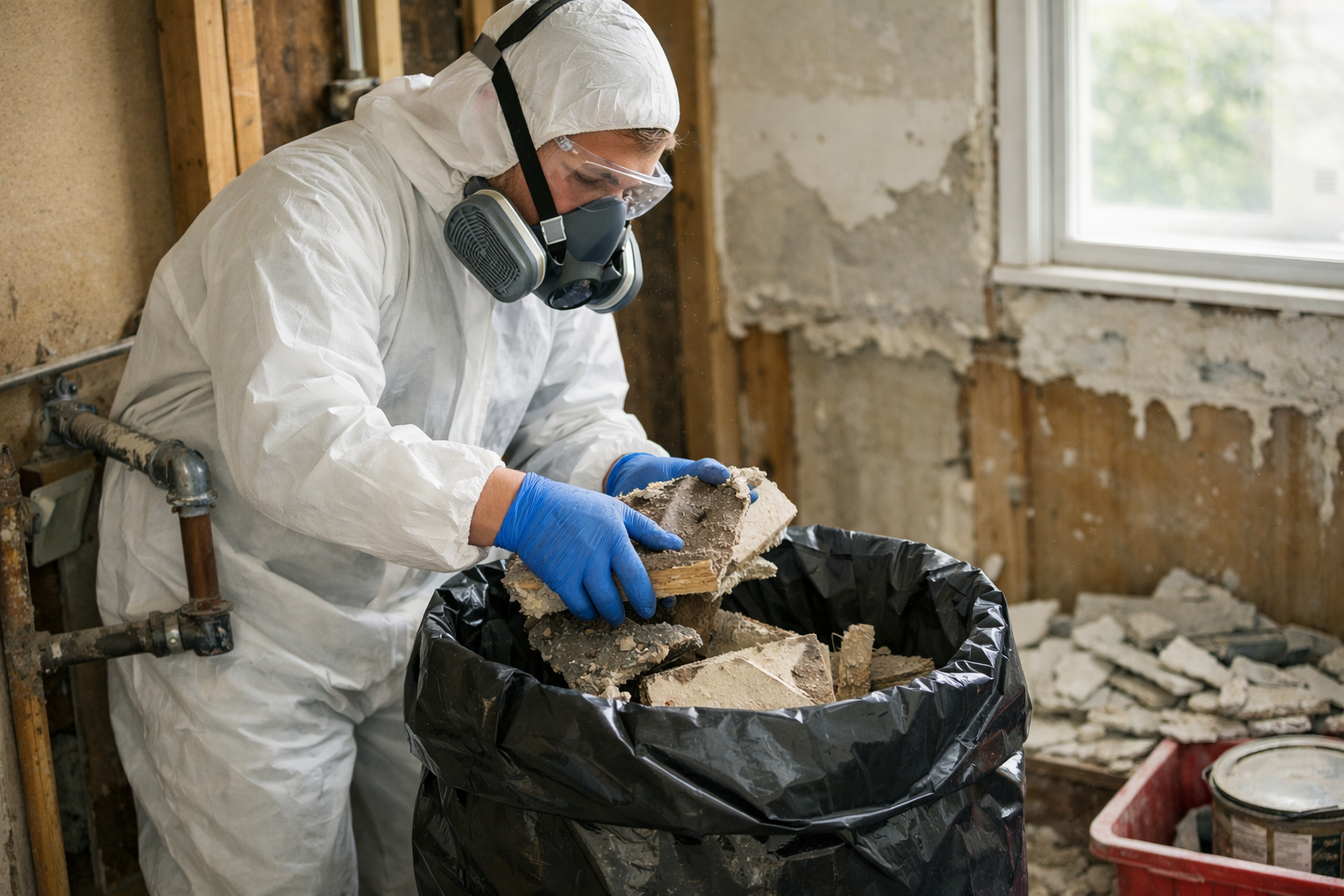
Tearing out a 1970s bathroom vanity can expose more than dated tile. Old adhesives, mercury switches, and lead-based paint chips turn a weekend demo into a chemical hazard. This post explains renovation-specific hazardous waste disposal, what materials trigger it, and how to move debris off your property legally.
You will learn which renovation materials count as hazardous, the exact steps to bag and transport them, and when to call a licensed abatement crew instead of hauling it yourself.
Renovation Materials That Count as Hazardous Waste
Hazardous waste is any discarded material that is toxic, corrosive, flammable, or reactive. A home renovation produces more of it than most owners expect, especially in houses built before 1990.
Here are the renovation materials that require special handling:
- Lead-based paint — Common in homes built before 1978. Chips and sanding dust are toxic.
- Asbestos — Found in popcorn ceilings, floor tile mastic, pipe wrap, and old drywall joint compound.
- Mercury — Hides in old thermostats, fluorescent tubes, and some wall switches.
- Solvents and adhesives — Contact cement, oil-based paint, varnish, and stripping chemicals.
- Treated lumber — Older pressure-treated wood may contain arsenic (CCA).
- Refrigerants — Freon from old mini-fridges or wet bar units in a basement remodel.
Why Age of the Home Matters
A pre-1978 house changes your entire demo plan. Federal rules require lead-safe work practices when disturbing painted surfaces in those homes.
If you scrape a windowsill in a 1965 colonial without containment, you risk spreading lead dust into carpet and HVAC returns. That single mistake can cost thousands in cleanup.
How to Dispose of Hazardous Renovation Waste Step by Step
Proper hazardous waste disposal follows a fixed order. Skipping steps risks fines and contamination.
- Identify the material first. Test suspect surfaces before demolition. Home asbestos and lead test kits exist, but lab confirmation is more reliable.
- Separate hazardous items from general debris. Never mix old paint cans or fluorescent tubes into your roll-off dumpster.
- Contain and label. Double-bag friable material in 6-mil plastic. Seal liquids in original containers when you can.
- Locate a receiving facility. Most counties run household hazardous waste (HHW) drop-off sites with set collection days.
- Transport safely. Keep containers upright, ventilate your vehicle, and never store solvents near a water heater.
- Keep your receipt. Disposal records matter if you sell the home or face a code inspection.
What You Cannot Put in a Dumpster
Standard construction dumpsters ban several renovation byproducts. Rental companies charge penalty fees when banned items show up during sorting.
- Asbestos-containing material
- Wet paint and stains (dried latex is often accepted)
- Fluorescent and CFL bulbs
- Batteries and electronics from a demolished home office
- Propane tanks from an old outdoor kitchen
Lead Paint and Asbestos Need Licensed Handling
Lead paint and asbestos are the two materials most homeowners underestimate. Both carry legal removal requirements that DIY effort cannot satisfy.
Lead Paint Removal Rules
The EPA Renovation, Repair and Painting (RRP) Rule requires certified firms for paid work in pre-1978 homes. The contractor must contain the area, use HEPA vacuums, and verify cleanup with dust wipes.
If you sand old baseboards yourself, bag the debris and dust as hazardous waste. Wet-mist the surface first to keep chips from becoming airborne.
Asbestos Removal Rules
Asbestos abatement almost always requires a licensed contractor and, in many states, a permit. A common trap is popcorn ceiling scraping during a living room refresh.
That texture may contain 1 to 3 percent asbestos. Once wet-scraped and dried, it must go to an approved landfill in sealed, labeled bags — not curbside pickup.
Where to Take Common Renovation Waste
Different materials go to different destinations. Matching the material to the right site prevents rejected loads.
- Leftover paint and solvents — County HHW facility or paint recycling drop-off (PaintCare in participating states).
- Fluorescent tubes and CFLs — Hardware stores and lighting retailers with take-back bins.
- Old appliances with refrigerant — Certified recyclers who reclaim Freon before crushing.
- Treated lumber — Approved construction landfill; never burn it, since smoke carries arsenic.
- Asbestos debris — Permitted disposal landfill via a licensed hauler.
A Real Kitchen Remodel Example
Picture a 1972 kitchen gut job. You will likely encounter vinyl floor tile with asbestos mastic, lead paint on trim, and an old fridge holding refrigerant.
That one project touches three separate disposal streams. Bundling them into one dumpster is both illegal and dangerous for the crew hauling it.
When to Hire a Restoration or Abatement Professional
Call a licensed crew when testing confirms asbestos, when lead dust spreads, or when the scope grows past a single room. These jobs demand containment and air monitoring you cannot rent at a hardware store.
A restoration firm handles the removal, transport, and documented disposal in one chain of custody. That record protects you during resale and insurance claims.
Use Restoration Locator to Find the Right Crew
Restoration Locator lists cleanup and restoration providers by location and specialty. Match the material to the specialist before you book.
- Filter listings by service type, such as asbestos abatement or lead removal.
- Sort by location to find crews licensed in your county.
- Check reviews for notes on cleanup thoroughness and disposal paperwork.
- Compare providers that carry certification for hazardous waste disposal.
Mistakes That Turn a Small Job Into a Fine
Most disposal violations come from three avoidable errors. Each one draws penalties from local environmental agencies.
- Pouring solvents down a drain. Paint thinner and stripper contaminate septic systems and municipal water.
- Burning treated or painted wood. The smoke releases arsenic, lead, and dioxins.
- Dumping demolition bags illegally. Roadside dumping of asbestos carries some of the steepest environmental fines.
A short trip to a county HHW site avoids all three. Most sites accept household quantities free or for a small fee.
Conclusion
Renovation waste is not ordinary trash — lead paint, asbestos, solvents, and refrigerants each demand a separate, documented disposal path. Test before demo, separate hazardous items, and hire licensed crews for asbestos and lead work. Correct hazardous waste disposal protects your family, your resale value, and your wallet.
Ready to hand off the dangerous parts of your project? Browse Disaster Cleanup & Restoration listings now at https://restorationlocator.com and find a licensed crew near you.