
When floods, fires, or storms damage your home, dangerous materials often become exposed or disturbed. Learning to identify hazardous materials after a disaster can protect your family’s health and guide your cleanup decisions.
The most common post-disaster hazards include asbestos from damaged insulation, lead paint chips from water damage, and mold growth in wet areas. This guide shows you specific warning signs to look for and when to call professionals.
Visual Signs of Asbestos Exposure After Disasters
Asbestos fibers become dangerous when building materials get damaged or disturbed. Homes built before 1980 likely contain asbestos in multiple locations.
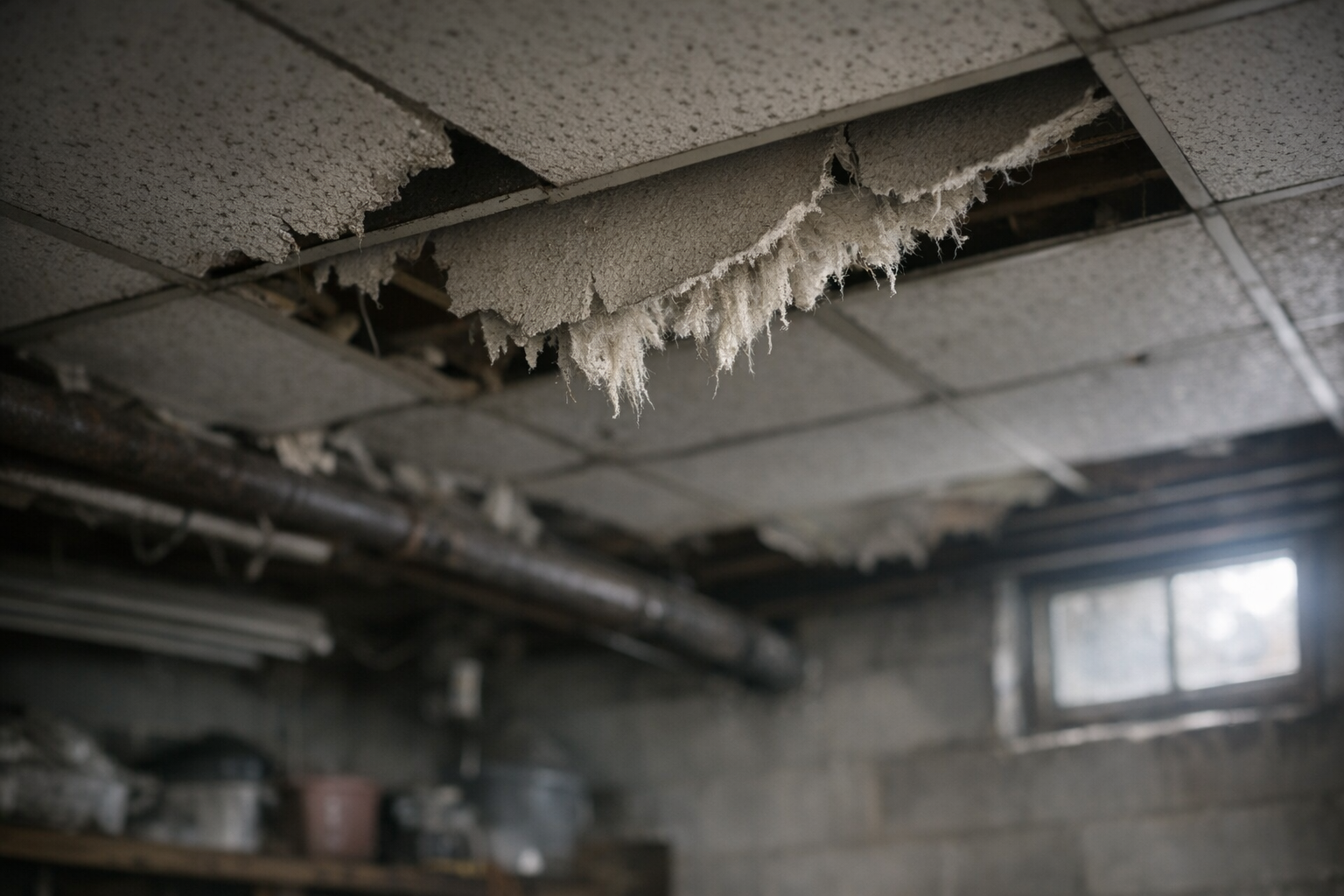
Damaged ceiling tiles show white or gray fibrous material when broken. These tiles often crack during earthquakes or break when water-logged from roof leaks.
Torn pipe insulation reveals white, chalky wrapping around hot water pipes and furnace ducts. Flood damage frequently tears this material, releasing fibers into the air.
Cracked floor tiles from the 1950s through 1970s often contain asbestos. Look for 9×9 inch tiles with black adhesive underneath – both the tile and glue likely contain asbestos.
Where Asbestos Hides in Disaster-Damaged Homes
- Attic insulation: Gray or white loose-fill material that looks like cotton
- Exterior siding: Cement board siding that cracks in straight lines
- Roofing materials: Shingles and felt paper on homes built before 1980
- Textured wall coatings: Popcorn ceilings and spray-on wall textures
How to Identify Hazardous Mold Growth Patterns
Mold starts growing within 24-48 hours after water damage. Toxic black mold (Stachybotrys) poses the greatest health risks but other molds also cause respiratory problems.
Black or dark green patches with a slimy texture indicate Stachybotrys growth. This mold prefers cellulose materials like drywall paper, cardboard, and wood.
White cotton-like growth on wooden surfaces signals Chaetomium mold. This species thrives in chronically wet conditions and produces musty odors.
Smell-Based Detection Methods
Fresh mold growth smells earthy and damp, like wet soil. Established colonies produce stronger odors ranging from musty to sweet.
Stachybotrys creates a distinctive smell similar to rotting wood mixed with wet newspaper. The odor intensifies when you disturb contaminated materials.
Hidden mold behind walls often causes persistent musty smells without visible growth. Check areas where you smell mold but see no stains.
Lead Paint Hazards from Water and Fire Damage
Lead paint becomes dangerous when water damage causes peeling or fire heat creates lead dust. Homes built before 1978 almost certainly contain lead paint layers.
Paint chips larger than a thumbnail pose immediate risks if children or pets might ingest them. Lead paint chips often have multiple color layers visible on the edges.
Water-damaged windowsills show characteristic lead paint failure patterns. The paint bubbles, then peels in large sections rather than small flakes.
High-Risk Lead Locations After Disasters
- Window frames and sills: Friction from opening windows wears lead paint into dust
- Door frames: Repeated opening and closing creates lead dust accumulation
- Exterior trim: Weather exposure causes lead paint to chalk and peel
- Stair railings: Hand contact wears away lead paint over time
Chemical Contamination from Household Products
Disasters often damage containers holding cleaning products, pesticides, and automotive fluids. Mixed chemicals create unpredictable reactions and toxic fumes.
Rainbow-colored stains on concrete floors indicate petroleum product spills. These stains shimmer with multiple colors when light hits the surface.
White crystalline residues form when cleaning products dry after container damage. Never touch unknown white powders – they may be caustic chemicals.
Strong chemical odors that burn your nose or throat signal dangerous vapor concentrations. Leave the area immediately and ventilate before returning.
Common Household Chemical Hazards
- Bleach and ammonia mixtures: Create deadly chloramine gas when combined
- Pool chemicals: Calcium hypochlorite releases chlorine gas when wet
- Pesticide concentrates: Highly toxic in undiluted form
- Paint thinners: Fire hazards that also cause respiratory damage
Structural Materials Releasing Toxic Particles
Fire damage creates unique hazards when synthetic materials burn incompletely. Modern building materials contain plastics and chemicals that become toxic when heated.
Melted vinyl siding releases dioxins and other carcinogens. The material turns black and gives off sweet, chemical smells.
Burned carpet padding contains formaldehyde and volatile organic compounds. Look for yellow or brown foam that crumbles when touched.
Smoke Residue Identification
Protein smoke from burned food creates thin, yellowish films on surfaces. This residue penetrates porous materials and causes persistent odors.
Synthetic material smoke leaves thick, black, sticky residues. These deposits contain multiple toxic compounds and resist water cleanup.
Wood smoke creates brown or gray powdery residues. While less toxic than synthetic smoke, large amounts still pose respiratory risks.
When Professional Testing Becomes Necessary
Air quality testing identifies invisible hazards that visual inspection misses. Professional testing becomes essential when you suspect multiple contamination types.
Hire certified inspectors when disaster damage affects pre-1980 building materials. They can test for asbestos, lead, and other hazards simultaneously.
Request mold testing if you smell musty odors but cannot locate visible growth. Hidden mold behind walls requires specialized detection equipment.
Choosing Qualified Testing Professionals
Look for inspectors certified by the American Board of Industrial Hygiene or similar organizations. These professionals understand how disasters create unique contamination patterns.
Verify that testing companies carry appropriate insurance and state licensing. Contamination assessment requires specialized training beyond general home inspection.
Use RestorationLocator.com to filter listings by certification type and read reviews from other homeowners. Sort results by location to find qualified professionals in your area.
Documentation and Safety Protocols
Photograph suspected hazardous materials before cleanup begins. These images help restoration professionals plan appropriate removal procedures.
Avoid disturbing suspected asbestos or lead materials during documentation. Use a camera with good zoom capability to capture details from a safe distance.
Create a written log of locations where you identified potential hazards. Include room names, material descriptions, and damage severity for each area.
Immediate Safety Measures
- Isolate contaminated areas: Use plastic sheeting to seal doorways
- Shut off HVAC systems: Prevent contamination spread through air ducts
- Wear protective equipment: Use N95 masks minimum for initial assessment
- Limit access: Keep family members and pets away from hazard zones
Understanding Professional Remediation Requirements
Federal and state regulations govern removal of asbestos, lead, and other hazardous materials. Professional remediation ensures compliance with safety standards and disposal requirements.
Asbestos removal requires licensed contractors with specialized equipment and training. DIY removal of asbestos-containing materials violates most local regulations.
Lead paint remediation follows EPA RRP (Renovation, Repair, Painting) rules for homes built before 1978. Contractors must be EPA-certified and use specific containment procedures.
Cost Factors for Professional Services
Asbestos remediation costs range from $1,200 to $3,000 per room depending on material type and contamination extent. Complex projects requiring full containment cost significantly more.
Mold remediation pricing depends on affected square footage and contamination severity. Small areas under 25 square feet may cost $500-$1,500, while whole-house projects reach $15,000 or more.
Lead paint removal varies by surface area and removal method. Paint stabilization costs less than complete removal but may not suit all situations.
Learning to identify hazardous materials protects your family during the vulnerable period after disasters. Professional testing and remediation ensure safe cleanup when dangerous substances are present.
Browse disaster cleanup and restoration listings on RestorationLocator.com to find certified professionals in your area. Start your search today to connect with qualified contractors who understand post-disaster contamination risks.
Sources
- EPA – Learn About Asbestos
- CDC – Facts about Stachybotrys chartarum and Other Molds
- EPA – Renovation, Repair, and Painting Program
- FEMA – Protecting Yourself from Hazardous Materials