
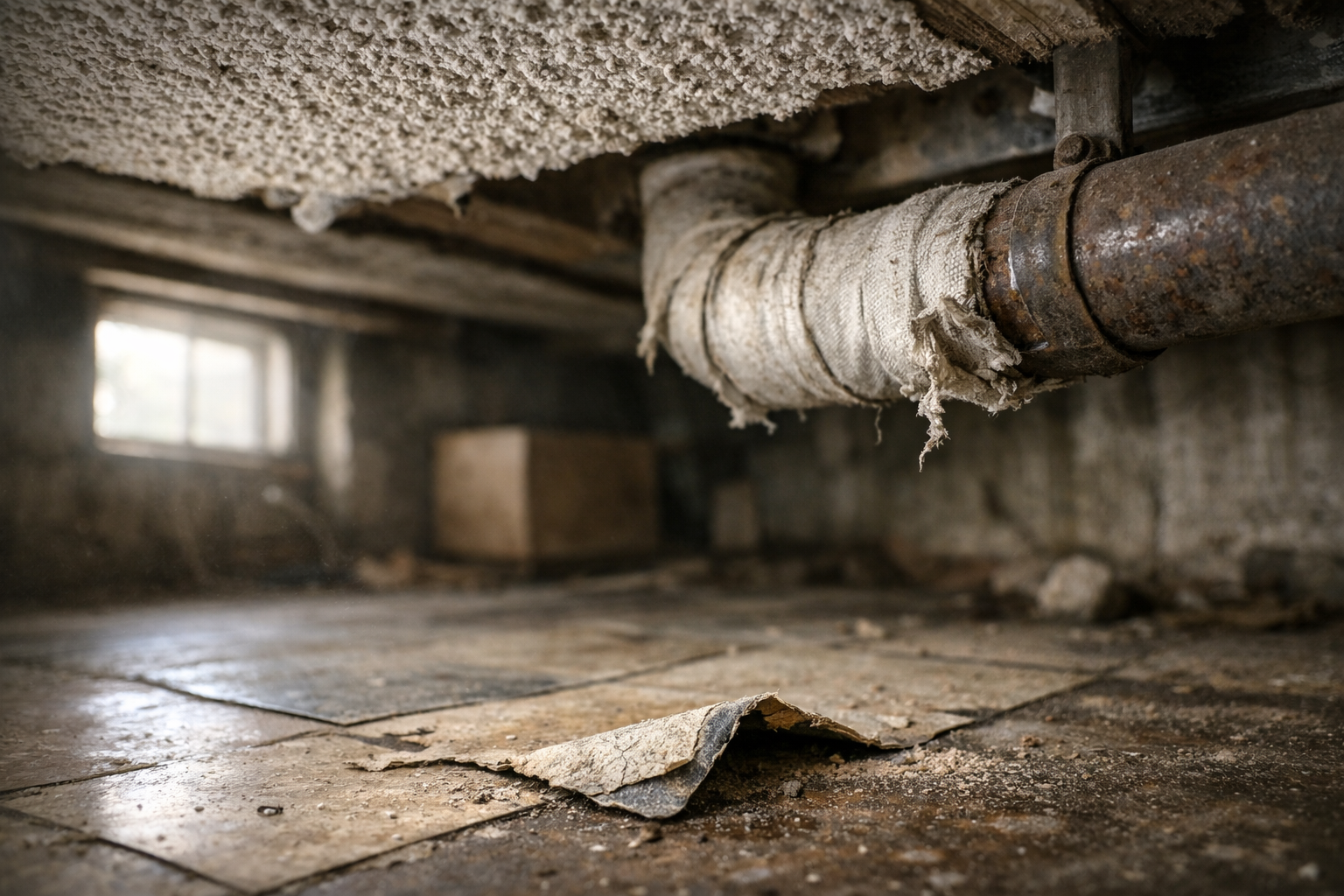
Asbestos was mined and used in more than 3,000 building products before regulations tightened in the late 1970s. That popcorn ceiling, floor tile, or pipe wrap in an older home could contain one of six mineral fibers. Knowing the asbestos types helps you gauge the danger and hire the right abatement contractor.
This post sorts asbestos into two families and breaks down each fiber. You will learn where each type shows up, how it behaves, and which poses the sharpest health risks.
The Two Families of Asbestos Types
All asbestos falls into two mineral groups: serpentine and amphibole. The split matters because fiber shape changes how the material lodges in your lungs.
Serpentine asbestos has curly, flexible fibers. Only one member exists in this group: chrysotile.
Amphibole asbestos has straight, needle-like fibers. Five members belong here, and they tend to cause disease faster because sharp fibers resist the body’s clearance mechanisms.
Chrysotile: The Most Common Asbestos Type
Chrysotile is white asbestos and accounts for roughly 95% of asbestos used in U.S. buildings. Its curly fibers wove easily into products, which made it the default choice for manufacturers.
Where You Find It
- Roofing shingles and felt
- Cement sheets and pipes
- Vinyl floor tiles and their backing
- Brake pads and clutch linings
- Wall and ceiling joint compound
The Risk
Chrysotile carries a lower cancer risk than amphibole fibers, but “lower” is not “safe.” Long-term exposure links to lung cancer, asbestosis, and mesothelioma.
The body clears some curly chrysotile fibers over time. Sharp amphibole fibers stay lodged, which explains the difference in disease speed.
Amosite: Brown Asbestos in Insulation
Amosite is brown asbestos and ranks second in commercial use after chrysotile. Its name comes from “Asbestos Mines of South Africa.”
You find amosite in thermal insulation, ceiling tiles, and pipe lagging. It appears in cement products manufactured before the 1980s.
Amosite fibers are straight and stiff. Studies rank its cancer risk above chrysotile because those fibers stay in lung tissue longer.
Crocidolite: The Most Dangerous Asbestos Type
Crocidolite is blue asbestos and carries the highest health risks of any variety. Its fibers are the thinnest, which lets them reach the deepest parts of the lung.
Where It Was Used
- High-temperature insulation for steam engines and pipes
- Spray-on fireproofing coatings
- Some cement products and yarn
Why It Kills Faster
Crocidolite fibers measure under one micron wide. Their sharpness and durability make them the deadliest of all asbestos types.
Workers in old crocidolite mines showed mesothelioma rates far above those exposed to other fibers. If a lab identifies blue asbestos in your building, treat it as a top priority for removal.
Three Rare Amphibole Asbestos Types
The remaining three fibers were rarely used in commercial products. They still appear as contaminants and in older materials.
Anthophyllite
Anthophyllite ranges from gray to brown. It showed up in some cement and insulation products, though in small quantities.
Tremolite
Tremolite was never sold on its own. It contaminated chrysotile deposits, talc, and vermiculite insulation.
The Libby, Montana vermiculite mine spread tremolite-laced insulation across millions of American homes. That single site drove a public health emergency declaration.
Actinolite
Actinolite is dark and often found alongside other amphiboles. It appeared in some paints, sealants, and drywall materials.
Quick Comparison of the Six Asbestos Types
- Chrysotile — white, curly, most common, lower relative risk
- Amosite — brown, straight, common in insulation, higher risk
- Crocidolite — blue, thin, highest risk, deadliest
- Anthophyllite — gray-brown, rare, moderate risk
- Tremolite — contaminant in talc and vermiculite
- Actinolite — dark, rare, found in sealants
How the Fiber Type Affects Your Health Risks
You cannot identify an asbestos type by sight alone. A certified lab must analyze a sample under a microscope.
The disease timeline stretches over decades. Mesothelioma can appear 20 to 50 years after first exposure.
Three conditions link to asbestos exposure:
- Asbestosis — lung scarring that causes shortness of breath
- Lung cancer — risk climbs sharply for smokers exposed to fibers
- Mesothelioma — a cancer of the lung or abdomen lining tied almost exclusively to asbestos
Undisturbed asbestos in good condition poses little immediate danger. Damage, sanding, or demolition releases fibers into the air.
What to Do If You Suspect Asbestos
Do not scrape, sand, or drill suspect materials yourself. Disturbing them turns a contained hazard into an airborne one.
Follow these steps instead:
- Leave the material alone and limit access to the area
- Hire a certified inspector to collect and test samples
- Get the lab report identifying the specific fiber type
- Contract a licensed abatement firm for removal or encapsulation
Finding the Right Abatement Contractor
Abatement is regulated work with strict containment and disposal rules. The contractor you pick should hold current state licensing.
Use Restoration Locator to shortlist qualified firms near you. On https://restorationlocator.com, you can:
- Sort by location to find crews in your county
- Check reviews from homeowners who handled similar jobs
- Filter listings for asbestos abatement specialists
Ask each candidate about containment methods, air monitoring, and disposal permits. A firm that answers clearly has done the work before.
Conclusion
Asbestos splits into serpentine chrysotile and five amphibole fibers, with crocidolite carrying the sharpest health risks. Fiber shape drives how fast disease develops, and only a lab can confirm which type you have. Leave suspect materials undisturbed and hire licensed help.
Browse Disaster Cleanup & Restoration listings now at https://restorationlocator.com and connect with abatement contractors in your area.
Sources
- U.S. Environmental Protection Agency – Learn About Asbestos
- National Cancer Institute – Asbestos Exposure and Cancer Risk
- Occupational Safety and Health Administration – Asbestos
- Agency for Toxic Substances and Disease Registry – ToxFAQs for Asbestos