
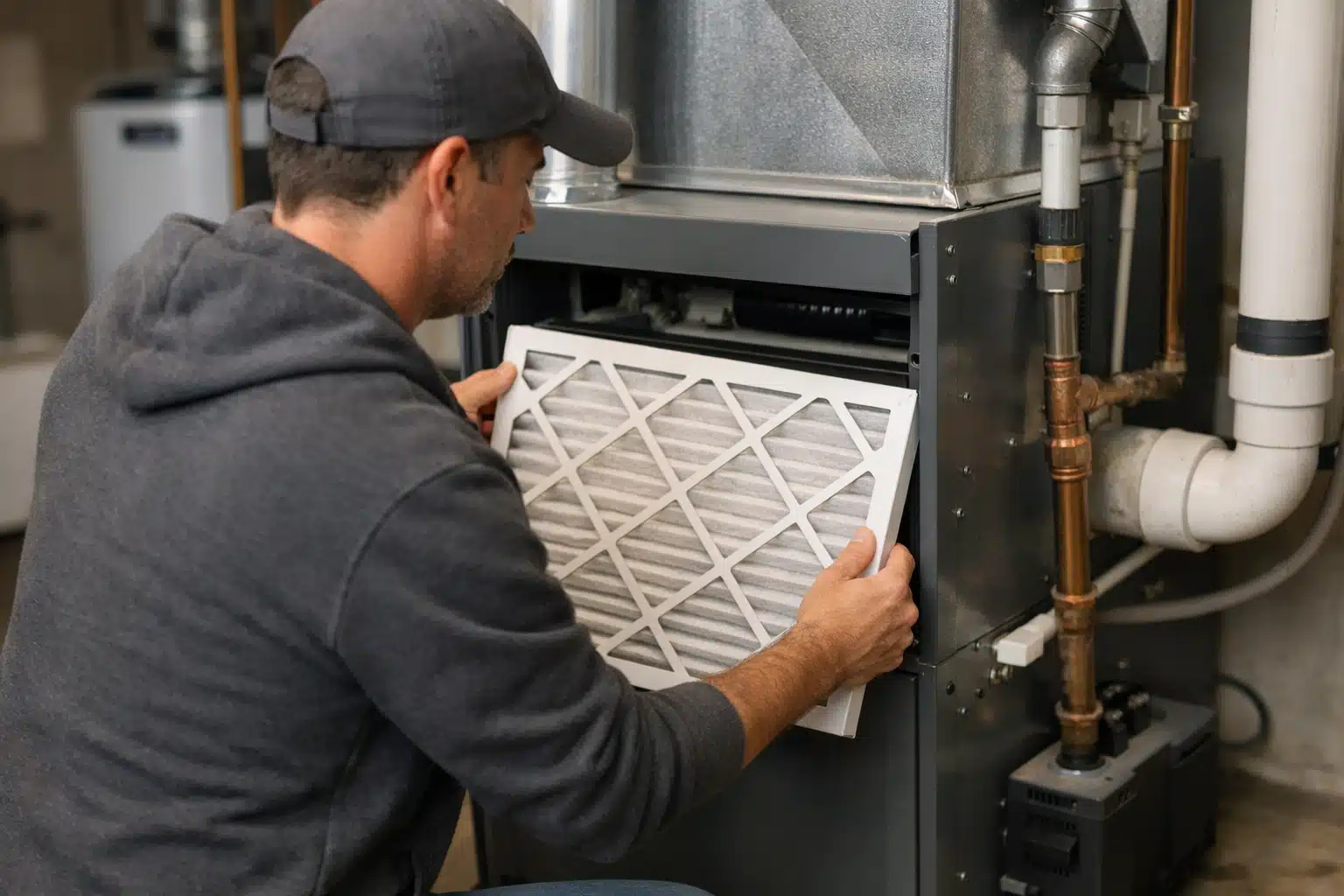
A furnace that fails on the coldest night of the year rarely fails without warning. Strange smells, short cycling, and uneven heat usually show up weeks earlier. Knowing how to prepare HVAC for winter means catching those signals before a December breakdown leaves you scrambling.
This post walks you through a practical winter-readiness checklist. You will learn which parts to inspect, when to call a technician, and how to protect your system from freeze damage.
Why Winter Prep Matters More Than You Think
Cold weather pushes heating equipment to run for hours at a stretch. A clogged filter or cracked igniter that coasted through fall will buckle under that load.
The stakes go beyond comfort. A furnace that quits during a hard freeze can let indoor temperatures drop below 40°F. That is when water lines near exterior walls start to freeze and burst.
HVAC failure and water damage are linked. A dead heating system in January is a frequent trigger for frozen pipe claims. That connection is why restoration work and heating prep belong in the same conversation.
How to Prepare HVAC for Winter: A Step-by-Step Checklist
Follow these steps in order. Most take under 30 minutes and require no special tools.
- Replace the air filter. Swap in a clean filter rated MERV 8 to 11. A dirty filter restricts airflow and forces the blower motor to overwork.
- Test the system early. Run the heat for 15 minutes in late September. If you smell burning dust after a few minutes, that is normal. If the smell lingers, shut it off.
- Clear the vents and returns. Move furniture, rugs, and boxes blocking supply registers. Blocked returns starve the system of airflow.
- Check the thermostat. Replace batteries and confirm the display responds to temperature changes. Upgrade to a programmable model if yours still uses a dial.
- Inspect the flue and exhaust. Look for bird nests, rust, or loose joints on the vent pipe. A blocked flue can push carbon monoxide back indoors.
- Test every smoke and CO detector. Winter heating raises carbon monoxide risk. Replace batteries now, not after an alarm chirps at 2 a.m.
- Seal visible duct gaps. Feel for air leaking from accessible duct joints in the basement or attic. Use mastic sealant or foil tape, never cloth duct tape.
What to Listen and Smell For During the Test Run
Your senses catch problems before gauges do. A grinding noise points to a failing blower bearing. Repeated clicking without ignition suggests a dying igniter or flame sensor.
A persistent chemical or sulfur smell is a stop sign. Shut the furnace down and call a technician. That odor can mean a cracked heat exchanger leaking combustion gases.
Heating System Maintenance a Technician Should Handle
Some tasks need a licensed hand. Annual heating system maintenance catches wear that a homeowner inspection misses.
A technician visit usually covers:
- Heat exchanger inspection for hairline cracks that leak carbon monoxide
- Burner cleaning to remove soot that lowers efficiency
- Gas pressure and flame sensor testing for clean, steady ignition
- Electrical connection tightening since loose wires cause intermittent shutdowns
- Blower motor amperage check to flag a motor drawing too much current
Schedule this in early fall. Heating contractors book solid once the first cold snap hits. Waiting until November means longer waits and emergency rates.
Furnace vs. Heat Pump: Different Winter Needs
A furnace burns fuel and needs combustion checks. A heat pump moves heat and needs different attention.
- Furnace owners: Prioritize the heat exchanger, flue, and gas pressure.
- Heat pump owners: Clear snow and ice from the outdoor unit. Check the defrost cycle and the auxiliary heat strips.
Heat pumps lose efficiency below freezing. If yours runs constantly on cold days, the backup heat may be stuck on. A technician can diagnose a failed defrost board.
Protecting Against Freeze Damage
Winter HVAC prep and pipe protection work together. A warm house keeps plumbing safe, but your system needs backup planning.
Keep the thermostat at 55°F or higher when away from home. Dropping below that invites frozen pipes in exterior walls.
Pay attention to these freeze-risk spots:
- Rooms far from the furnace. Back bedrooms and bonus rooms over garages stay colder. Keep their doors open so heated air circulates.
- Vacant properties. If you leave for the holidays, set the heat no lower than 60°F. Ask a neighbor to check daily during extreme cold.
- Condensate lines on high-efficiency furnaces. These drain lines can freeze if routed near an exterior wall. A frozen line triggers a safety shutoff.
What Happens When the System Fails Anyway
Even a well-maintained system can quit. A power outage, a snapped belt, or a tripped limit switch can stop the heat in minutes.
When that happens during a freeze, act fast:
- Open cabinet doors under sinks on exterior walls
- Let faucets drip to keep water moving
- Use space heaters safely, away from fabric and water
- Shut off the main water supply if a pipe has already burst
A burst pipe can release hundreds of gallons before you notice. Fast water extraction limits mold growth and structural rot.
When to Call a Restoration Pro Instead of an HVAC Tech
These two trades solve different problems. An HVAC contractor fixes the equipment. A restoration company handles the damage a failure leaves behind.
Call a restoration provider when you find:
- Standing water from a frozen pipe burst near ductwork or the furnace
- Soaked drywall or insulation around supply registers
- A musty smell weeks after a minor leak you thought dried out
- Soot or smoke residue from a furnace that backfired or puffed back
Water inside ductwork is a hidden hazard. Trapped moisture breeds mold that spreads every time the blower runs. Restoration crews clean and dry ducts before that spreads.
Finding the Right Provider Fast
When water meets a failed heating system, speed matters. Restoration Locator lets you find local crews without cold-calling a dozen companies.
Use the directory to move quickly:
- Sort by location to find crews that reach you within hours
- Check reviews from homeowners who dealt with winter water damage
- Filter listings by specialty like water extraction or mold remediation
Your Winter HVAC Readiness Takeaways
Preparing your HVAC for winter comes down to early testing, a clean filter, and a fall technician visit. Combine that with freeze protection to guard against the water damage a failure can cause.
If a frozen pipe or furnace backfire does hit your home, do not wait for the mess to spread. Browse Disaster Cleanup & Restoration listings at https://restorationlocator.com and connect with a local crew today.
Sources
- U.S. Department of Energy – Maintaining Your HVAC System
- U.S. Consumer Product Safety Commission – Carbon Monoxide Information Center
- American Red Cross – Winter Storm Safety and Frozen Pipes