
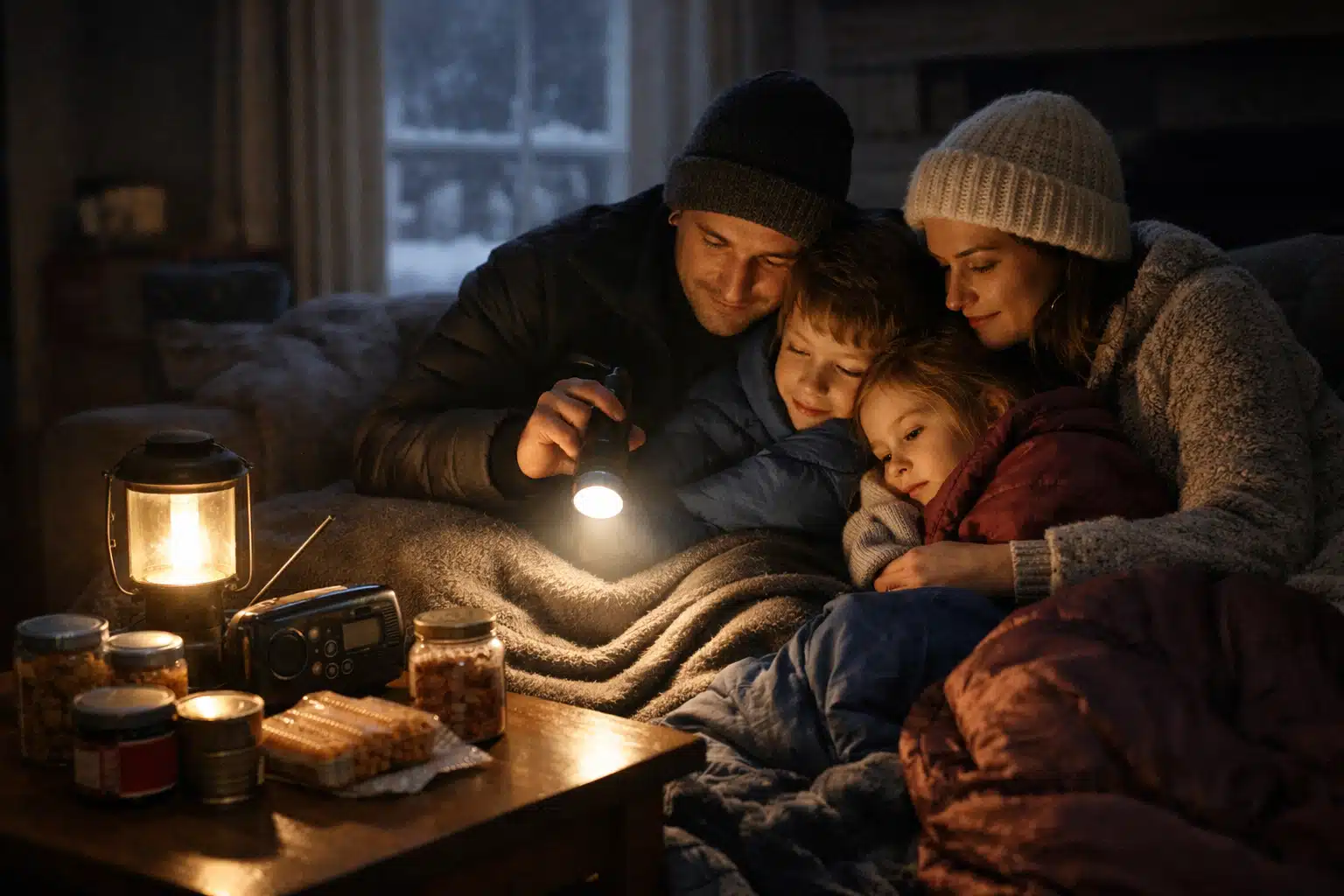
A winter storm knocks out power at 2 a.m., and within six hours your indoor temperature drops below 50°F. That is when frozen pipes, carbon monoxide risks, and spoiled food become real threats. Winter power outage preparation is the set of steps that keep your home livable and damage-free during extended cold-weather blackouts.
This post walks you step by step: what to stock, how to keep heat and water safe, and how to find cleanup help if a pipe bursts anyway.
Why Winter Outages Are Different From Summer Ones
A summer blackout is uncomfortable. A winter blackout can cause thousands of dollars in structural damage within a single night.
The difference is freezing temperatures. When your furnace loses power, water inside pipes can freeze, expand, and crack the pipe wall.
A single burst half-inch pipe releases up to 8 gallons of water per minute. In an unoccupied home, that floods floors and ceilings before anyone notices.
Winter outages last longer, too. Ice-laden power lines and blocked repair roads mean restoration crews take days, not hours, in heavy storms.
Winter Power Outage Preparation: The Core Supply Checklist
Emergency home readiness starts with supplies you gather before the forecast turns bad. Buy these items in October, not during the storm rush.
- Battery or hand-crank radio — for NOAA weather alerts when cell towers fail
- Flashlights and headlamps — one per person, plus spare batteries
- Three days of water — one gallon per person per day
- Non-perishable food — items needing no cooking or refrigeration
- Manual can opener — electric openers are useless in a blackout
- Portable phone chargers — charged and stored full
- Wool blankets and sleeping bags — rated for low temperatures
- First-aid kit and a week of medications
- Carbon monoxide detector — battery-powered, tested monthly
Store supplies in one labeled bin near an exit. Family members should know its exact location in the dark.
How to Protect Your Pipes During a Winter Blackout
Frozen pipes are the top cause of winter storm insurance claims. Preventing them takes a few deliberate actions once the power drops.
Step-by-Step Pipe Protection
- Open cabinet doors under sinks on exterior walls. Warmer room air reaches the pipes.
- Let faucets drip at a slow trickle. Moving water resists freezing longer than still water.
- Know your main shutoff valve location. Turn it off if you leave the house.
- Drain lines if the outage will outlast your home’s heat retention.
- Insulate exposed pipes in basements, crawl spaces, and attics with foam sleeves beforehand.
Pipes against uninsulated exterior walls freeze first. Garage plumbing and crawl-space runs are high-risk zones in older homes.
If a Pipe Freezes
Do not use an open flame to thaw a frozen pipe. Apply gentle heat with a hair dryer, starting near the faucet end.
Keep the faucet open as you thaw. Flowing water tells you the ice is clearing.
Keeping Warm Without Your Furnace
Your home loses roughly 10 to 15°F in the first eight hours without heat. Trapping existing warmth matters more than generating new heat.
- Close off unused rooms and seal gaps under doors with towels
- Gather everyone into one room — body heat and shared blankets help
- Hang blankets over windows at night to cut radiant heat loss
- Dress in layers with a hat indoors, since heat escapes from the head
Never heat your home with a gas stove, oven, or outdoor grill. Carbon monoxide from these kills faster than cold.
Safe Use of Generators and Alternative Heat
A portable generator runs your furnace and refrigerator during long outages. It also produces lethal exhaust if placed wrong.
Generator Safety Rules
- Run generators outdoors only, at least 20 feet from windows and doors
- Never plug a generator into a wall outlet — this backfeeds and risks lineworkers
- Use a transfer switch installed by a licensed electrician
- Store fuel in approved containers away from living spaces
- Let the unit cool before refueling
Space heaters cause home fires every winter. Keep them three feet from anything flammable and plug directly into the wall, never an extension cord.
Protecting Food and Appliances
A closed refrigerator holds safe temperatures for about four hours. A full freezer stays frozen for 48 hours if left shut.
Keep both doors closed as much as you can. Move milk, meat, and leftovers to a cooler packed with snow or ice if the outage drags on.
Unplug sensitive electronics before the power returns. A surge when the grid restarts can fry computers and TVs.
When Winter Storm Damage Still Happens
Even strong preparation cannot stop every burst pipe or ice-dam leak. Acting fast limits how far water spreads into walls and subfloors.
Water sitting for more than 24 to 48 hours grows mold. Soaked drywall, insulation, and carpet lose structural integrity and need removal.
What to Do in the First Hour
- Shut off the main water valve immediately
- Document damage with photos and video for your insurer
- Move valuables to a dry area
- Call a water damage restoration company for extraction and drying
Restoration crews bring industrial pumps, dehumidifiers, and moisture meters. Household fans alone cannot dry inside walls fast enough to stop mold.
Finding Restoration Help Fast on Restoration Locator
When a pipe bursts during a storm, you need a local crew within hours, not days. Restoration Locator lets you compare providers by location and specialty in one place.
Use the directory to speed up your search:
- Filter listings by location to find crews that reach your area in winter conditions
- Sort by service type such as water extraction, mold remediation, or structural drying
- Check reviews from homeowners who faced similar storm damage
- Compare availability for emergency and after-hours response
Save two or three listings before storm season. Having numbers ready cuts response time when every minute counts.
A Simple Pre-Storm Routine
Run this short checklist whenever a winter storm warning appears for your area.
- Charge all phones and backup batteries
- Fill water jugs and a bathtub for non-drinking use
- Test flashlights and your carbon monoxide detector
- Locate your water main and generator transfer switch
- Lower the thermostat slightly, then let faucets drip if power drops
- Review your saved Restoration Locator listings
Repeat this each storm. The routine becomes muscle memory after one or two cycles.
Key Takeaways
Winter power outage preparation protects your home from frozen pipes, cold exposure, and carbon monoxide risk during long storms. Stock supplies early, protect your plumbing, and heat and power your home safely. If damage strikes, fast water extraction prevents mold and structural loss.
Build your emergency home readiness plan before the first freeze. Browse Disaster Cleanup & Restoration listings on Restoration Locator and save a local crew now.