
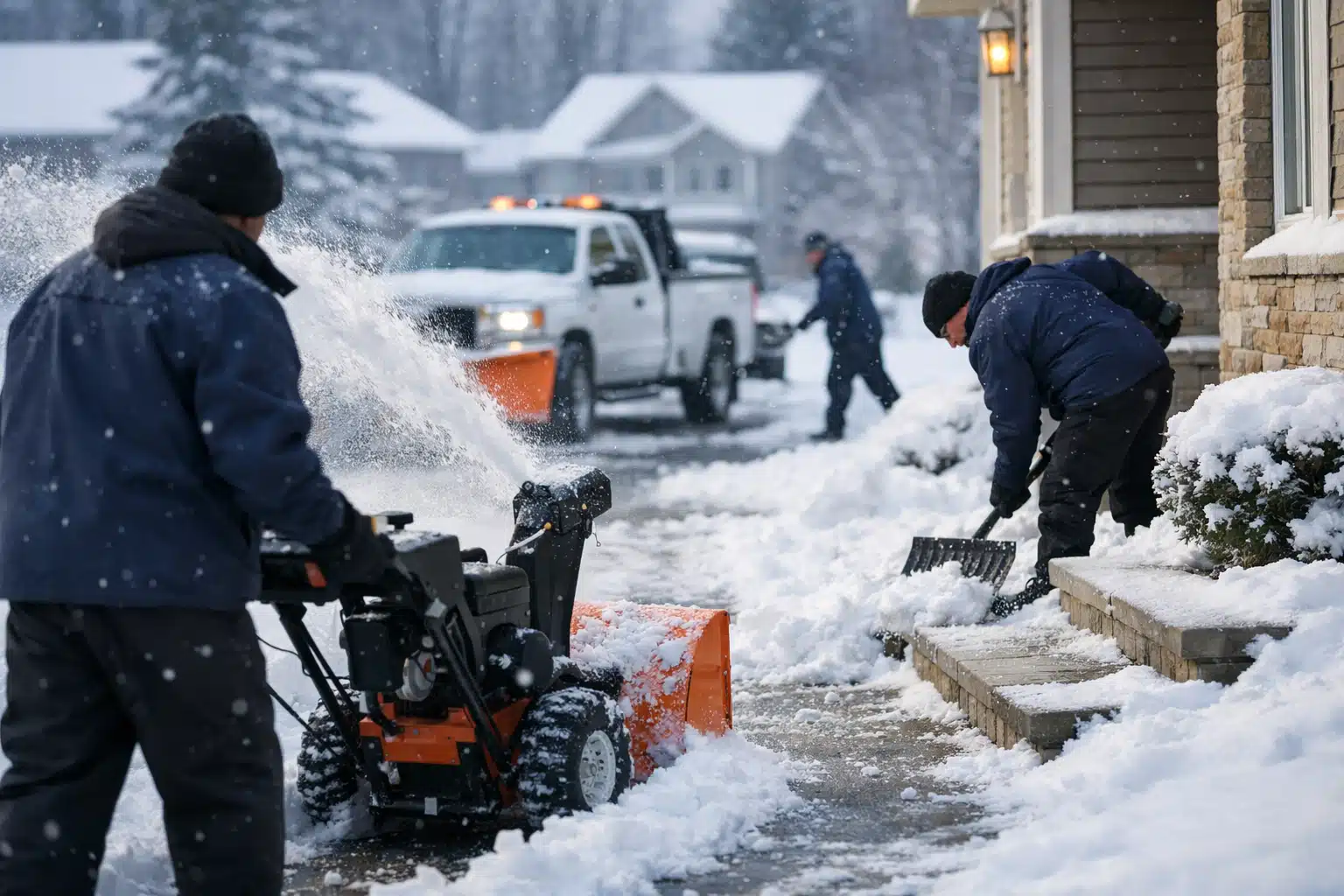
A missed plow at 6 a.m. can mean a sprained wrist on an icy driveway and a car stuck in six inches of snow. Picking the right snow removal service before the first storm hits prevents that scenario. The difference between a reliable provider and a flaky one shows up during the worst weather, not the easiest.
This post breaks down the exact criteria that separate dependable crews from no-shows. You will learn what to verify, which questions to ask, and how to compare providers on Restoration Locator.
What a Snow Removal Service Actually Does
A snow removal service clears snow and ice from driveways, walkways, roofs, and parking areas using plows, blowers, shovels, and de-icing agents. Residential plans range from single-storm calls to full-season contracts triggered by snowfall depth.
Scope varies more than most homeowners expect. Some crews only plow the driveway. Others handle walkways, steps, roof raking, and salt application.
Clarify scope first. A plow that pushes snow against your garage door or buries your mailbox creates new problems.
Criteria for Choosing the Best Snow Removal Service
The strongest providers meet six specific standards. Weak ones fail at least one. Check each before signing anything.
1. Response Time Guarantees
Ask how fast they clear your property after snowfall stops. A written guarantee matters more than a verbal promise.
- Trigger depth: Many contracts activate at 2 inches of accumulation. Confirm the number.
- Clearance window: Reliable crews finish residential routes within 4 to 8 hours of a storm ending.
- Overnight storms: Verify they clear before your morning commute, not after.
2. Proof of Insurance
Request a certificate of insurance before work begins. A plow can crack a driveway, hit a parked car, or damage underground sprinkler heads.
Confirm both liability coverage and workers’ compensation. If a crew member slips and files a claim, uncovered injuries can land on your homeowner policy.
3. Equipment Matched to Your Property
A truck plow suits long rural driveways. A compact snow blower fits tight suburban lots and steep inclines.
Ask what equipment they bring. Heavy trucks can gouge decorative pavers or crack aging asphalt on narrow drives.
4. De-Icing and Salt Practices
Ice causes more injuries than snow does. Confirm whether salt or calcium chloride application is included or billed separately.
Rock salt corrodes concrete and harms nearby plants. Providers using calcium magnesium acetate protect concrete rated under five years old.
5. Contract Terms and Pricing Model
Three pricing models dominate residential snow removal. Each fits a different budget and snowfall pattern.
- Per-visit: You pay each time they clear. Best for light-snow regions.
- Seasonal flat rate: One fixed price covers unlimited storms. Predictable for heavy-snow areas.
- Per-inch tiered: Cost scales with accumulation depth. Fair in variable climates.
Read cancellation and snowfall-cap clauses. Some seasonal contracts stop clearing after a set total, leaving you exposed late in winter.
6. Local Track Record
Providers familiar with your street know where ice pools and where plows can safely pile snow. A crew new to the area may block a storm drain or a shared sidewalk.
Read reviews that mention specific storms. A comment about a crew showing up during a 14-inch blizzard tells you more than a generic five-star rating.
Questions to Ask Before You Hire
Call or message two or three providers with the same list. Their answers expose gaps fast.
- What snowfall depth triggers service under my plan?
- How many hours after a storm will my property be cleared?
- Is de-icing included, or billed per application?
- Can you send a current certificate of insurance?
- Where will you pile cleared snow on my property?
- What happens during back-to-back storms in one week?
- Do you clear walkways and steps, or driveways only?
A provider who dodges the insurance or response-time question is telling you something. Move on.
Red Flags That Signal an Unreliable Provider
Certain warning signs appear before the first snowfall. Spotting them early saves a frozen morning later.
- No written contract: Verbal-only arrangements collapse during disputes.
- Cash-only, no receipts: Hard to track and often uninsured.
- Vague on scheduling: “We’ll get to you” means you clear your own steps at dawn.
- No local references: A crew without neighborhood history is a gamble.
- Pressure to sign immediately: Legitimate providers give you time to compare.
How Snow Removal Fits Broader Winter Home Maintenance
Snow clearing works alongside other winter home maintenance tasks that protect your property. Standing snow against a foundation causes meltwater seepage. Ice dams on roofs force water under shingles.
A provider who rakes roof snow prevents ice dams before they form. Ask whether they handle roof clearing for homes with low-slope sections or valleys prone to buildup.
Coordinate snow removal with gutter cleaning done in late fall. Clogged gutters feed ice dams, and a cleared gutter drains meltwater away from the foundation.
Using Restoration Locator to Compare Snow Removal Providers
Restoration Locator lists Disaster Cleanup & Restoration providers, including crews that handle snow and ice. Use the directory to shorten your search.
- Sort by location to find crews that work your zip code and know local roads.
- Check reviews for mentions of response time during major storms.
- Filter listings by service type to match providers who handle roofs and walkways, not driveways alone.
- Compare contact details side by side before requesting quotes.
Start your search weeks before the first forecast. Reliable crews fill their seasonal rosters early, and last-minute calls land you with whoever is left.
What Happens When Snow Turns Into Water Damage
Melting snow and ice dams cause interior water damage every winter. A clogged roof valley or a blocked downspout sends water into walls and ceilings.
If snow buildup leads to a leak, you may need both snow clearing and water damage restoration. Restoration Locator lists providers for both, so one search covers the full scope.
Act fast on interior leaks. Water trapped behind drywall feeds mold within 48 hours.
Final Takeaways
The right snow removal service proves itself with written response-time guarantees, current insurance, and equipment matched to your driveway. Compare at least three providers using the same questions, and watch for red flags like missing contracts or cash-only terms. Book early, before heavy-snow crews fill their seasonal schedules.
Browse Disaster Cleanup & Restoration listings now at https://restorationlocator.com and compare snow removal providers in your area.