
A single house mouse can slip in a gap the width of a pencil. By October, that gap becomes an open invitation as outdoor temperatures drop. Fall rodent prevention means closing those entry points before mice start scouting for warmth.
This post covers where rodents enter in autumn, how to block them, and what warning signs mean you already have company. Each step focuses on stopping the problem before an infestation takes hold.
You will learn the exact gaps to seal, the fall yard habits that attract mice, and when the damage calls for cleanup help.
Why Rodents Target Homes in Fall
Mice and rats move indoors when night temperatures fall below 50°F. They are chasing three things: warmth, food, and nesting material. Your attic insulation offers all three.
A female house mouse can produce up to 10 litters per year. One pair entering in September can become dozens by December. Early action matters because reproduction speeds up once they settle in.
Fall rodent prevention works best as a proactive habit, not a reaction to droppings on the counter.
The Most Common Fall Entry Points
Rodents enter where construction materials meet or where utilities pass into walls. The usual culprits include:
- Gaps around pipes and cables entering the foundation or exterior walls
- Garage door corners where the rubber seal has worn or curled
- Dryer vents with broken or missing flaps
- Roof-soffit junctions and gaps near the chimney flashing
- Crawl space vents with torn screening
A mouse needs a quarter-inch hole. A rat needs about a half-inch. If a pencil fits, a mouse fits.
How to Seal Your Home Against Rodents: Step by Step
Sealing entry points is the single most effective rodent barrier. Work from the ground up and inspect in daylight, when small gaps are easier to spot.
- Walk the foundation. Mark every gap around pipes, wires, and the sill plate with painter’s tape.
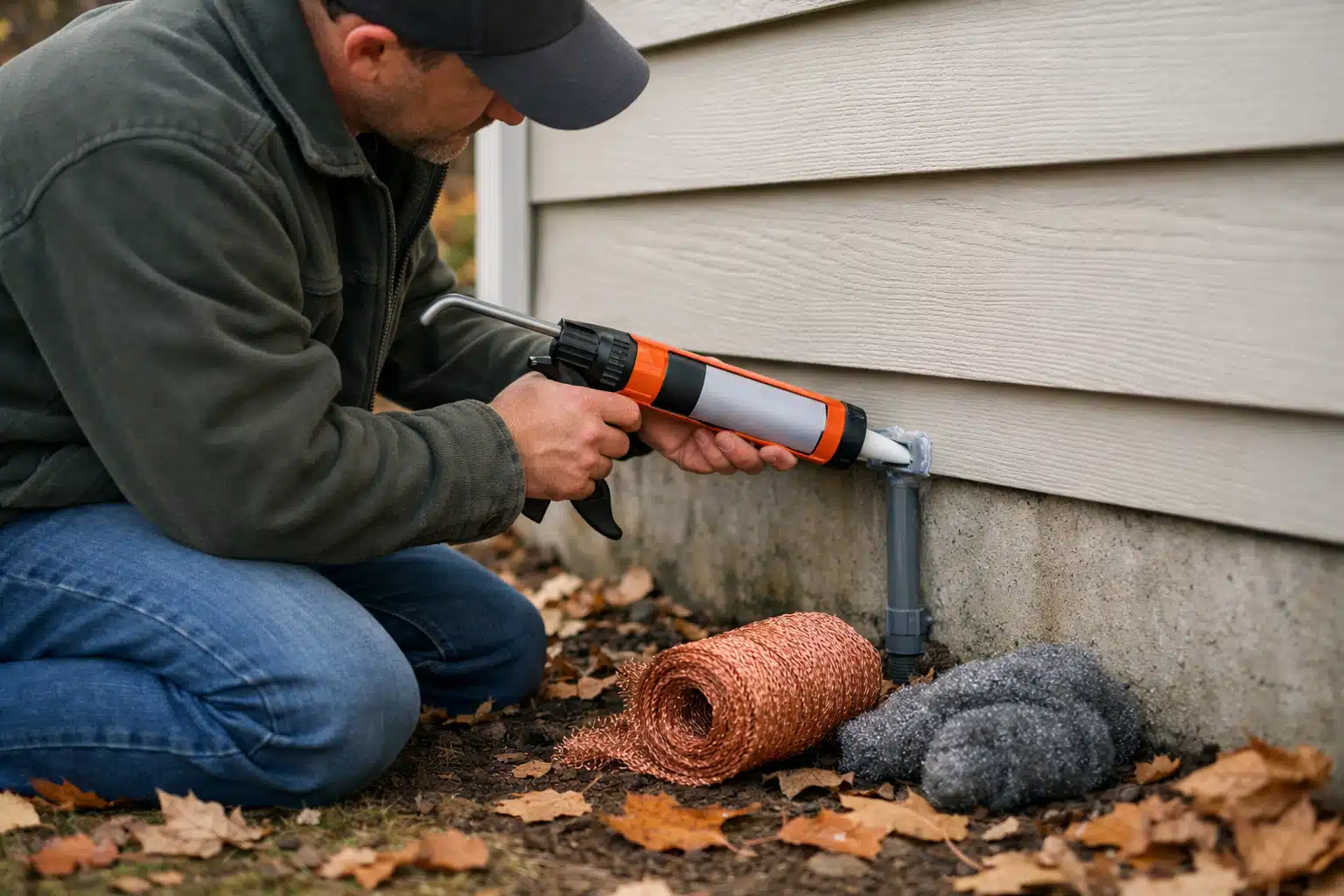
- Stuff large gaps with copper mesh or steel wool. Mice cannot chew through metal fibers the way they chew through foam alone.
- Seal over the mesh with silicone caulk or expanding foam to lock it in place.
- Replace worn garage door seals. Check the bottom corners first, where gaps form as the rubber ages.
- Install vent covers with quarter-inch hardware cloth on crawl space and attic vents.
- Add a chimney cap if yours is missing or damaged.
Avoid plastic or standard foam as a standalone barrier. Rodents gnaw through both within days.
Why Steel Wool Beats Foam Alone
Steel wool and copper mesh create a physical barrier a mouse cannot bite through. Foam fills the void but flexes under teeth. Pairing metal mesh with caulk gives you a seal that lasts years, not weeks.
Yard and Garage Habits That Keep Mice Away
Outdoor conditions decide whether rodents even approach your foundation. A clean perimeter removes the cover and food that draw them close.
Firewood stacked against the house is a classic mistake. It gives mice a sheltered bridge straight to your siding.
- Move woodpiles at least 20 feet from the house and raise them off the ground
- Trim shrubs and tree limbs back from the roofline, since rats climb branches to reach soffits
- Store birdseed and pet food in sealed metal containers, not paper bags
- Clear fallen leaves and debris from along the foundation where mice nest
- Empty garage clutter that creates dark, undisturbed hiding spots
Bird feeders deserve attention. Spilled seed under a feeder feeds mice all autumn long.
Kitchen and Pantry Defense
Indoor food storage shapes how long a rodent stays once inside. Glass jars and metal tins stop the easy meals that keep a population growing.
Wipe counters nightly and sweep crumbs from under appliances. A mouse survives on three grams of food a day. Small spills matter more than you would think.
Early Warning Signs of a Rodent Problem
Catching rodents early keeps a minor issue from becoming a structural one. Watch for these signals as the weather cools:
- Droppings near baseboards, in drawers, or along wall edges
- Gnaw marks on food packaging, wood trim, or wiring
- Scratching sounds in walls or ceilings at night
- A musky, ammonia-like odor in enclosed spaces
- Greasy rub marks along walls where rodents travel the same path
Chewed wiring is the hidden danger. Rodents cause an estimated share of house fires each year by stripping insulation off electrical wires.
When Damage Calls for Cleanup Help
Rodent infestations leave behind contamination that goes past the live animals. Droppings and urine carry hantavirus and other pathogens. Nesting material in insulation and ductwork spreads contaminants into your air.
Cleanup after a large infestation involves removing soiled insulation, sanitizing affected areas, and sealing entry points. This work calls for protective equipment and proper disposal. A restoration provider handles contamination that a store-bought trap cannot.
How to Find Rodent Cleanup and Restoration Help
When an infestation has damaged insulation, wiring, or ductwork, restoration goes beyond pest removal. Restoration Locator lists providers who handle rodent damage cleanup and decontamination.
Use the directory to match a provider to your situation:
- Sort by location to find providers near your home
- Check reviews from past customers before you reach out
- Filter listings by the type of cleanup work you need
- Compare providers side by side on scope and coverage area
Strong home pest protection pairs prevention with a cleanup plan if rodents break the barrier. Knowing who to call before an emergency saves time during one.
Your Fall Rodent Prevention Checklist
Run this list before the first hard freeze to lock out rodents for the season:
- Seal all exterior gaps with steel wool and caulk
- Replace worn garage and door seals
- Cover vents with quarter-inch hardware cloth
- Move firewood 20 feet from the house
- Store food and birdseed in sealed metal containers
- Clear leaves and debris from the foundation
- Inspect the attic and basement for droppings monthly
Done in September, this list keeps most homes rodent-free through winter.
Conclusion
Proactive fall rodent prevention comes down to sealing entry points, cutting off food, and clearing outdoor cover before the cold drives mice inside. Catching early signs stops a pair of mice from becoming a colony. When rodents have already caused damage, cleanup and decontamination restore a safe home.
Start your search for rodent cleanup and restoration providers at https://restorationlocator.com and compare local help before the season turns.