
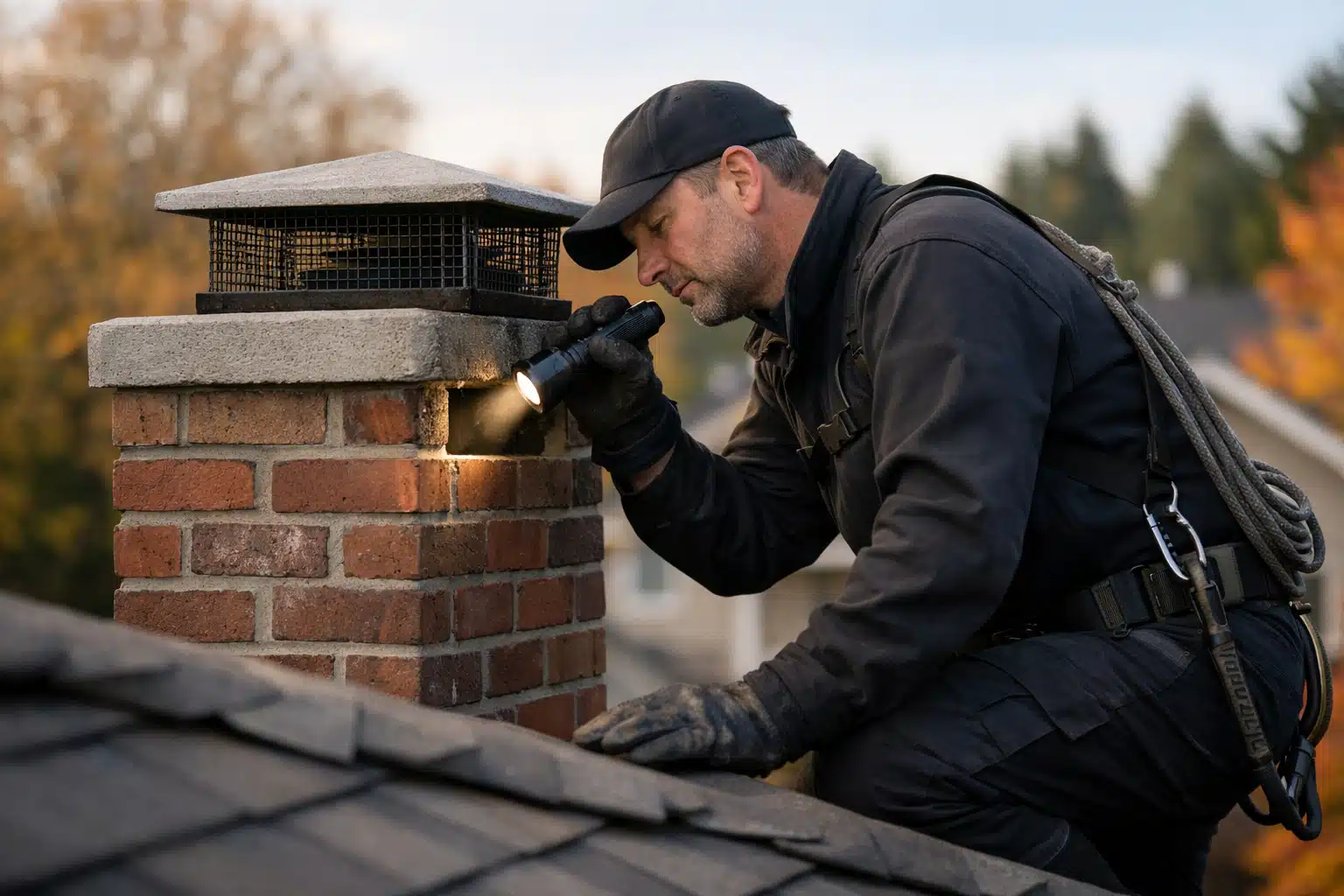
A chimney fire can reach 2,000°F and spread into your walls before you smell smoke. A fireplace safety check before the first cold-weather burn catches the hidden damage that causes these fires. Most homeowners never look past the firebox, and that blind spot is where trouble starts.
This post covers what to inspect, which warning signs matter, and when to call a specialist. The focus is on pre-winter fire safety — the checks that matter most before your fireplace works hard all season.
Why a Fireplace Safety Check Matters Before Winter
A fireplace safety check is an inspection of the firebox, flue, chimney, and venting to confirm the system can burn fuel without leaking heat, smoke, or carbon monoxide into your home.
Fireplaces sit unused for months. Over a warm season, moisture, animals, and settling masonry create problems you cannot see from your living room.
The U.S. Fire Administration reports that heating equipment causes thousands of residential fires each winter. Many trace back to creosote buildup and blocked chimneys — both preventable with inspection.
What Happens During the Off-Season
Three things change while your fireplace sits idle:
- Creosote hardens. Last year’s buildup bakes into a tar-like layer that ignites easily.
- Animals move in. Squirrels, birds, and raccoons nest in flues during spring and summer.
- Masonry cracks. Freeze-thaw cycles open gaps in mortar joints and flue liners.
Each one raises your fire risk. None shows up until you light the first fire.
The Pre-Winter Fire Safety Checklist
Run these checks before you burn anything. Work from the firebox outward.
- Clear the firebox. Remove old ash, debris, and any nesting material. Ash holds moisture that corrodes metal parts.
- Inspect the damper. Open and close it fully. It should move freely and seal tight when shut.
- Check the flue for blockage. Shine a flashlight up the chimney. Look for nests, leaves, or soot buildup thicker than one-eighth of an inch.
- Examine the firebox walls. Cracked firebrick or crumbling mortar lets heat reach framing behind the wall.
- Test smoke and carbon monoxide detectors. Replace batteries. Confirm both alarm types sit within range of the fireplace.
- Look at the chimney cap and crown. A missing cap invites water and animals. A cracked crown funnels moisture into the masonry.
If any step raises a question, stop and schedule an inspection. A failed burn is not the time to learn about a blocked flue.
Creosote: The Hidden Fire Starter
Creosote is the dark residue that wood smoke leaves on flue walls as it cools. It builds in three stages, and the third stage — a glossy, hardened glaze — is the hardest to remove and the most flammable.
The Chimney Safety Institute of America recommends cleaning once creosote reaches one-eighth of an inch. At one-quarter inch, the fire risk climbs sharply.
You cannot judge creosote thickness by glancing up the chimney. A camera inspection measures it accurately, and most cleaning companies include one.
Warning Signs Your Fireplace Needs Attention
Some problems announce themselves if you know what to watch for. Act on any of these before lighting a fire:
- Smoke pushing back into the room points to a blocked or undersized flue.
- A strong campfire smell when the fireplace is cold signals heavy creosote.
- White staining on exterior masonry (efflorescence) means water is moving through the chimney.
- Falling mortar or brick chips in the firebox indicate deteriorating masonry.
- A rusted damper or firebox reveals a moisture leak above.
These signs rarely appear in isolation. One usually points to a larger issue worth a specialist’s eyes.
Gas Fireplaces Need Checks Too
Gas units skip creosote but carry their own risks. Before winter, verify the pilot light burns blue, not yellow. A yellow flame suggests incomplete combustion and carbon monoxide.
Check the glass front for cracks and confirm the vent terminates clear of snow and debris outside. A blocked gas vent is as dangerous as a blocked wood flue.
When to Call a Professional Inspector
The National Fire Protection Association recommends a yearly inspection of every chimney, fireplace, and vent. A certified inspector sees what a flashlight misses.
Call a specialist when you find any of the following:
- A cracked or missing flue liner
- Visible gaps in chimney mortar
- Water staining inside the firebox or on nearby walls
- A chimney that was not inspected in the past 12 months
- Any home you moved into without inspection records
Water damage behind a chimney wall often needs more than a cleaning. If moisture reached framing or drywall, restoration work may follow.
How to Find the Right Help Near You
Restoration Locator lists cleanup and restoration providers by location. If your fireplace check turns up water damage, smoke damage, or fire damage, start your search there.
Use the directory to your advantage:
- Filter listings by location to find providers in your service area.
- Check reviews to see how past clients rated the work.
- Sort by category to match the specific damage — water, smoke, or structural.
Matching the provider to the problem saves time and money. A smoke-damage cleanup differs from a water-damage repair.
What a Failed Safety Check Can Cost
Skipping a fireplace safety check trades a small inspection fee for a large risk. A chimney fire can spread into attic framing within minutes.
A single creosote fire can crack a clay flue liner, and a cracked liner lets heat reach wood framing on every future burn. One missed check compounds into repeated danger.
Carbon monoxide carries a quieter cost. A blocked flue vents combustion gases into living space, and the gas has no smell. Working detectors are the last line of defense, not the first.
Conclusion
A fireplace safety check before winter catches creosote buildup, blocked flues, cracked masonry, and venting problems before they cause a fire. Run the checklist yourself, watch for warning signs, and bring in a certified inspector for anything structural. Good pre-winter fire safety protects your home long before the first cold night.
If an inspection reveals water, smoke, or fire damage, visit https://restorationlocator.com to find restoration providers near you. Start your search today.