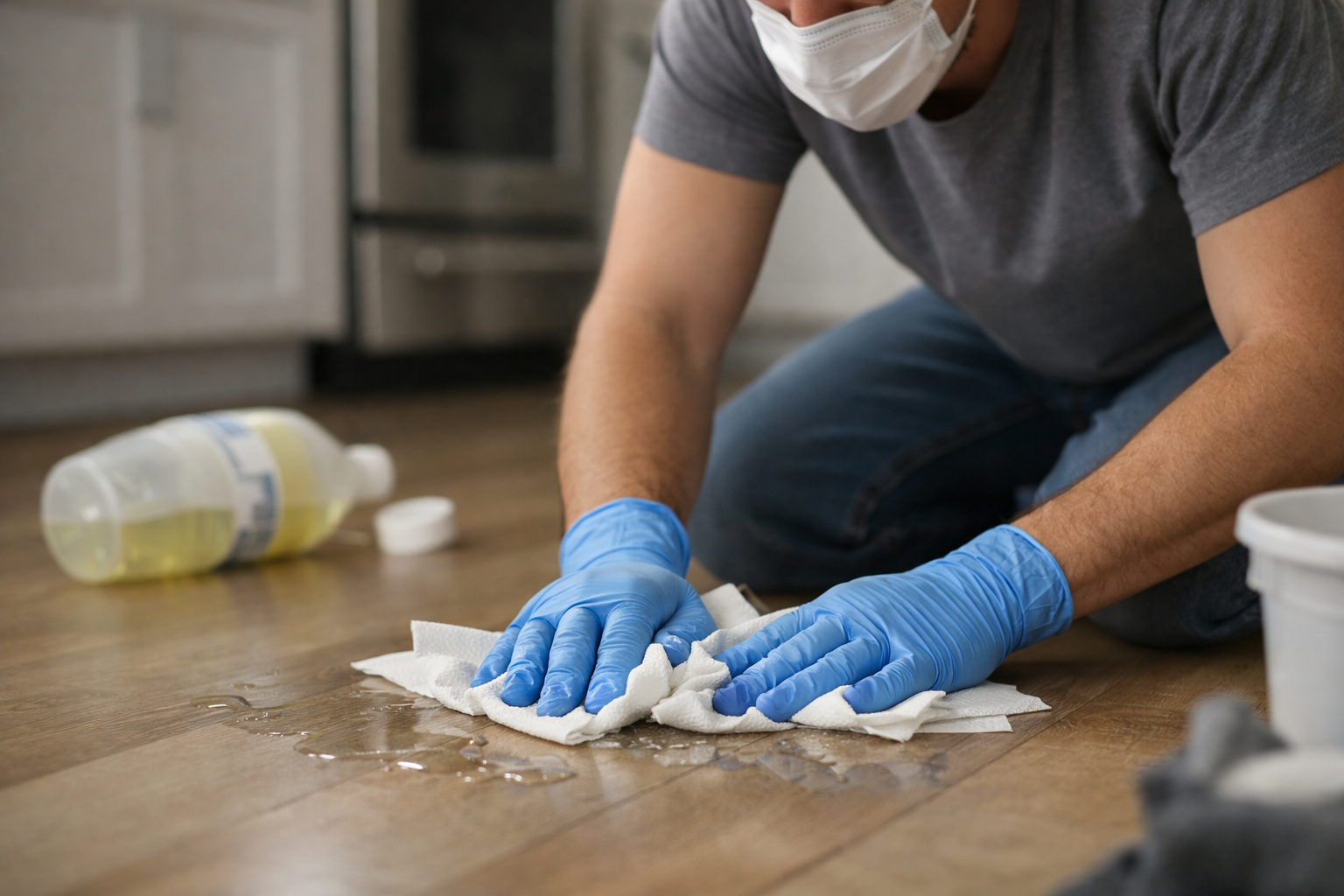
A knocked-over bottle of bleach on the kitchen floor rarely needs a phone call to a cleanup crew. Most minor household spills can be handled safely with items already under your sink. This article covers DIY decontamination for small incidents, including which spills you can tackle yourself and which ones demand a hands-off approach.
You will learn a repeatable step-by-step method, the gear that keeps you protected, and the clear warning signs that mean it is time to stop and call a specialist.
What DIY Decontamination Means for a Small Spill
DIY decontamination is the act of removing, neutralizing, and disposing of a hazardous substance yourself after a minor spill. It applies to volumes you can contain with a few paper towels or a small absorbent pad.
A “small spill” has a working definition worth knowing. The Environmental Protection Agency treats spills under one quart of most household chemicals as manageable at home, assuming good ventilation.
Anything larger, or any spill of an unknown substance, moves outside safe DIY territory. That line matters more than most people think.
Spills You Can Safely Clean Yourself
- Household cleaners like diluted bleach, glass cleaner, or dish soap
- Cooking oil or grease under a cup in volume
- Latex (water-based) paint before it dries
- Nail polish remover or rubbing alcohol in small amounts
- Pet accidents or food waste on hard flooring
Spills That Are Not DIY Jobs
- Mercury from a broken thermometer or fluorescent tube
- Gasoline, kerosene, or other fuels indoors
- Raw sewage or blood covering more than a small patch
- Unlabeled or unknown chemicals
- Any spill producing strong fumes that cause dizziness or coughing
Gather the Right Protective Equipment First
Skin and lungs are the two entry points that get people hurt during cleanup. Protect both before you touch anything.
A single splash of concentrated bleach can burn skin in under a minute. Nitrile gloves cost pennies and prevent almost every common chemical burn at home.
Keep this short kit ready near your cleaning supplies:
- Nitrile gloves (not latex, which degrades with solvents)
- Safety glasses or goggles
- An N95 mask for fume-producing liquids
- Paper towels and a plastic trash bag
- Baking soda or cat litter as an absorbent
Open a window or run an exhaust fan before starting. Ventilation drops fume concentration faster than any product you can buy.
Step-by-Step DIY Decontamination for Small Spill Cleanup
Follow these steps in order. Skipping the containment step is the most common mistake in small spill cleanup.
- Stop the source. Set the bottle upright or cap the container first.
- Protect yourself. Put on gloves, glasses, and a mask before contact.
- Contain the edges. Ring the spill with baking soda or cat litter to stop spreading.
- Absorb the liquid. Blot from the outside inward with paper towels. Never wipe outward.
- Neutralize if needed. Acids can be neutralized with baking soda; bases with diluted vinegar. Test a small area first.
- Clean the surface. Wash with warm soapy water once the bulk is removed.
- Dispose correctly. Seal soiled towels in a plastic bag. Do not pour chemicals down the drain.
- Ventilate and check. Keep air moving and inspect the area an hour later for residue.
Why Blotting Beats Wiping
Wiping spreads contamination across a wider surface. Blotting lifts liquid straight up into the absorbent material.
On carpet or upholstery, wiping also pushes liquid deeper into the fibers. That single habit turns a two-minute cleanup into a stain that lingers for weeks.
Handling Specific Small Spills
Bleach on a Kitchen Floor
Bleach spills release chlorine fumes, which sting the eyes at low levels. Ventilate first, then dilute the spill with plenty of water before blotting.
Never mix bleach with ammonia-based cleaners during cleanup. The reaction creates toxic chloramine gas within seconds.
Latex Paint on Tile or Wood
Wet latex paint wipes up with warm water and a rag. Move fast, because a skin forms within 20 minutes.
Dried paint needs a plastic scraper and patience, not solvents that damage finishes.
Rubbing Alcohol or Nail Polish Remover
These evaporate quickly but are flammable. Kill any open flame and unplug nearby heat sources before cleaning.
Blot the liquid, then wash the surface once fumes clear.
Disposal Rules That Keep You Legal and Safe
Household hazardous waste should never go down the drain or into regular trash in bulk. Contaminated paper towels from a small spill can go in your household bin, sealed in plastic.
Leftover chemicals are a different matter. Most counties run hazardous waste drop-off days for paint, solvents, and cleaners.
Check your local waste authority’s website for the nearest collection site. Pouring solvents into storm drains carries fines in many areas.
When to Stop and Call a Restoration Specialist
Some situations look small but hide real risk. Stop your DIY decontamination and get professional help if any of the following apply.
- The spill covers more than a few square feet
- Liquid has soaked into drywall, subfloor, or insulation
- You smell fumes after ventilating for 15 minutes
- The substance is unknown or unlabeled
- Anyone develops headache, nausea, or trouble breathing
- Sewage or floodwater is involved
Porous materials absorb contaminants past the surface. A cleaner who treats only what is visible leaves hazards behind the wall.
How to Find the Right Provider
Restoration Locator lists cleanup specialists by location and specialty. Use the filters to match your exact situation.
- Sort by location to find crews that respond in your area fast
- Filter listings by specialty such as biohazard or water damage
- Check reviews from past customers before you call
- Compare certifications like IICRC training on each listing
Prevent the Next Spill
Storage habits stop most household spills before they happen. Keep liquids in their original labeled containers.
Store chemicals below eye level so a fall never lands on your face. A shallow plastic tray under bottles catches drips and small leaks automatically.
Keep incompatible products apart. Bleach and ammonia on the same shelf invite a dangerous mistake during a rushed grab.
Key Takeaways
Small spills of labeled household chemicals are safe to handle with gloves, ventilation, and the blot-and-absorb method. Stop immediately if fumes persist, materials soak through, or the substance is unknown.
For anything past a minor spill, matching your situation to a qualified crew matters more than speed. Browse Disaster Cleanup & Restoration listings at https://restorationlocator.com and start your search today.
Sources
- U.S. Environmental Protection Agency – What to Do if a Mercury Thermometer Breaks
- CDC / NIOSH – Chemical Safety
- OSHA – Personal Protective Equipment
- Poison Control – The Dangers of Mixing Bleach and Ammonia