
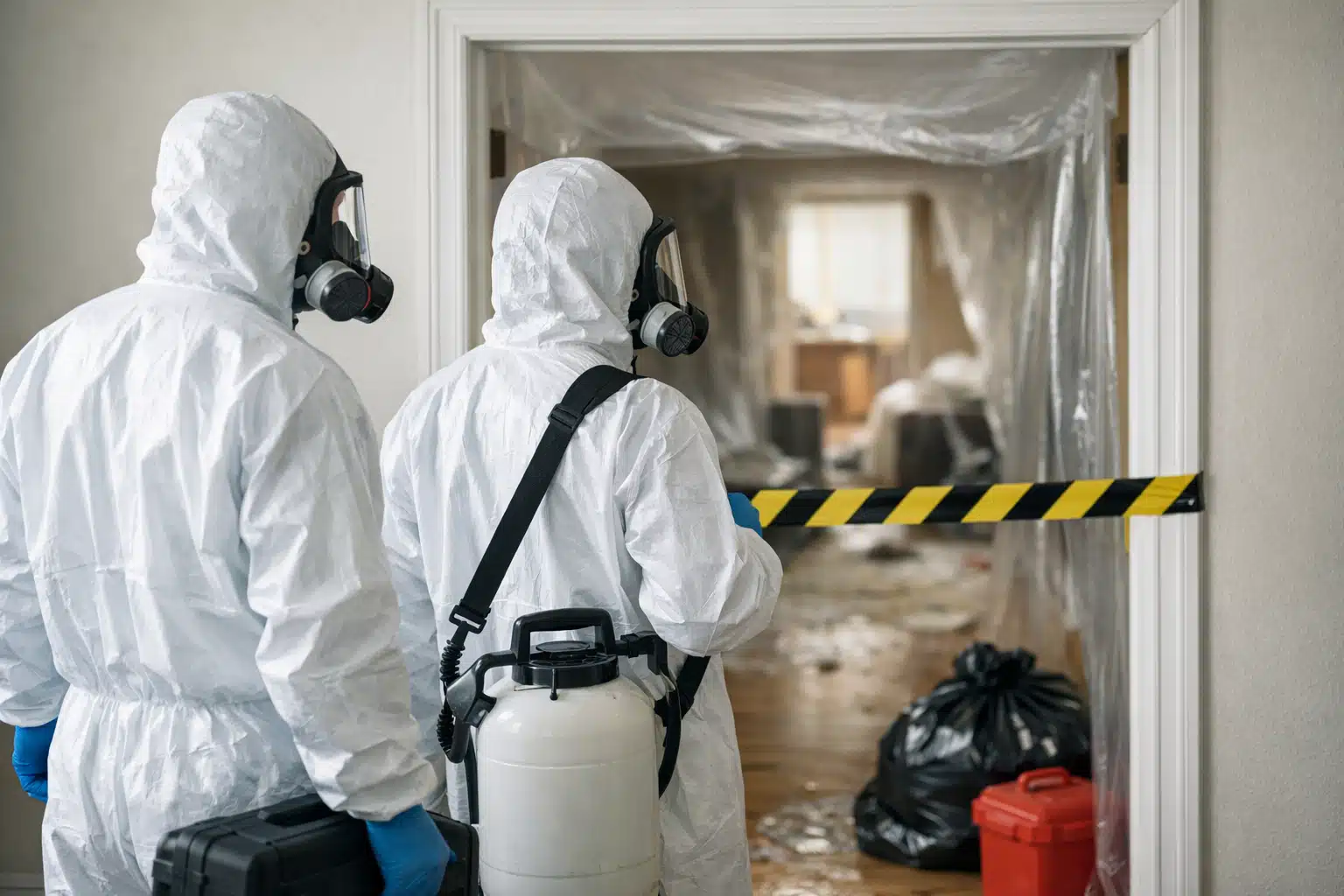
A biohazard incident at home leaves behind more than visible mess. Bloodborne pathogens, bacteria, and airborne particles can linger for days after an event like an unattended death, sewage backup, or crime scene. Planning a biohazard home restoration correctly protects your health long before any cleaning begins.
This post walks you step by step. You will learn what counts as a biohazard, the safety protocols that matter most, and how to screen providers before you let anyone into your home.
What Counts as a Biohazard in Your Home
A biohazard is any biological material that can cause disease or infection in humans. In residential settings, that covers a narrow but serious set of situations.
- Unattended deaths where decomposition has started
- Trauma and crime scenes involving blood or bodily fluids
- Sewage backups carrying E. coli, hepatitis, and parasites
- Hoarding environments with animal waste or mold colonies
- Infectious disease contamination, such as surfaces exposed to MRSA or C. diff
Each type carries a different risk profile. A sewage backup spreads pathogens across porous flooring fast. A decomposition event releases volatile compounds that soak into drywall and subfloor within 48 hours.
Why DIY Cleanup Rarely Works
Household disinfectants do not kill all bloodborne pathogens. Hepatitis B can survive on dry surfaces for up to seven days, per CDC data. Wiping a visible stain leaves infectious material in grout lines, floor seams, and wall cavities.
Biohazard work requires hospital-grade disinfectants and documented dwell times. Most homeowners lack both the chemicals and the training to confirm a space is decontaminated.
Step-by-Step Plan for Safe Biohazard Home Restoration
Follow this sequence to protect your household and support a safe recovery. Skipping steps increases exposure risk for everyone on site.
- Secure the area immediately. Close doors to the affected room. Shut off HVAC to stop spores and particles from spreading room to room.
- Keep people and pets out. Children and anyone with a weakened immune system face the highest infection risk. Block access until a trained team clears the space.
- Document for insurance. Photograph the scene from a doorway without touching anything. Many homeowner policies cover biohazard cleanup under specific perils.
- Call a licensed biohazard remediation company. Do not attempt entry in street clothes. Proper work demands respirators, Tyvek suits, and nitrile gloves.
- Verify containment before cleaning. A qualified crew sets up negative air pressure and plastic barriers. This stops cross-contamination during removal.
- Confirm final decontamination. Ask for ATP testing or verification that surfaces were treated and tested, not just wiped down.
The Safety Gear That Separates Pros From Amateurs
Personal protective equipment is the clearest sign a crew knows the work. A legitimate team arrives with full barrier protection before entering any contaminated zone.
- N95 or P100 respirators rated for biological aerosols
- Full-body suits with sealed wrists and ankles
- Double-layer nitrile gloves, not latex
- Eye protection to block fluid splash
- Dedicated biohazard waste containers for regulated medical waste disposal
If a provider shows up in jeans and a dust mask, stop the job. That crew is putting your home and their own health at risk.
Health Considerations During and After Restoration
Exposure symptoms can appear hours or days after contact. Respiratory irritation, nausea, and skin reactions are common warning signs. Anyone who entered an affected area without protection should monitor their health closely.
Air quality matters most after cleanup finishes. Decomposition and sewage leave odor-causing molecules that signal lingering particles. A reliable crew treats the air with hydroxyl generators or ozone, then retests.
Who Faces the Highest Risk
Certain household members need extra protection during a biohazard event. Keep the following groups away from the home until clearance is confirmed.
- Infants and young children
- Pregnant people
- Adults over 65
- Anyone on immunosuppressant medication
- People with chronic respiratory conditions
Arrange temporary lodging if the affected area touches shared living space. A single contaminated bathroom can compromise an entire floor through shared ventilation.
How to Vet a Biohazard Restoration Provider
The right provider holds specific credentials, not generic cleaning certifications. Biohazard work falls under OSHA bloodborne pathogen standards and state medical waste rules. Ask targeted questions before you sign anything.
- Confirm OSHA bloodborne pathogen training. Every technician entering the site needs current certification.
- Ask about waste transport licensing. Regulated waste must go to an approved facility with a manifest trail.
- Request proof of liability insurance. Biohazard-specific coverage protects you if something goes wrong on site.
- Check response time. Decomposition and sewage damage worsen by the hour. A crew that cannot arrive within a day costs you more in structural damage.
- Review their decontamination verification method. Reputable teams test, not just eyeball, their results.
Use Restoration Locator to Narrow Your Search
Finding a qualified crew fast matters during a biohazard event. Restoration Locator lets you filter listings by location so you reach crews that respond in your area quickly.
- Sort by location to find the nearest biohazard-capable crews
- Check reviews from past clients who faced similar situations
- Filter listings for providers that handle trauma, sewage, or hoarding cleanup
Reading recent reviews reveals how a crew handled sensitive, high-stress calls. Look for mentions of discretion, response speed, and clear communication during a safe recovery.
What a Realistic Timeline Looks Like
Most residential biohazard cleanups run two to four days from assessment to clearance. A small sewage backup may finish in a day. A decomposition event with subfloor saturation can take a full week once demolition and reconstruction enter the picture.
Build in extra time for air clearance testing. Rushing this stage leaves pathogens and odor behind, which forces a second visit and a second bill.
Key Takeaways
Safe biohazard home restoration starts with containment and ends with verified decontamination. Keep vulnerable household members away, document the scene for insurance, and hire a crew with OSHA training and proper waste licensing. Your health depends on the gear they wear and the testing they confirm.
Start your search now on Restoration Locator and filter by location to reach qualified biohazard crews in your area.