
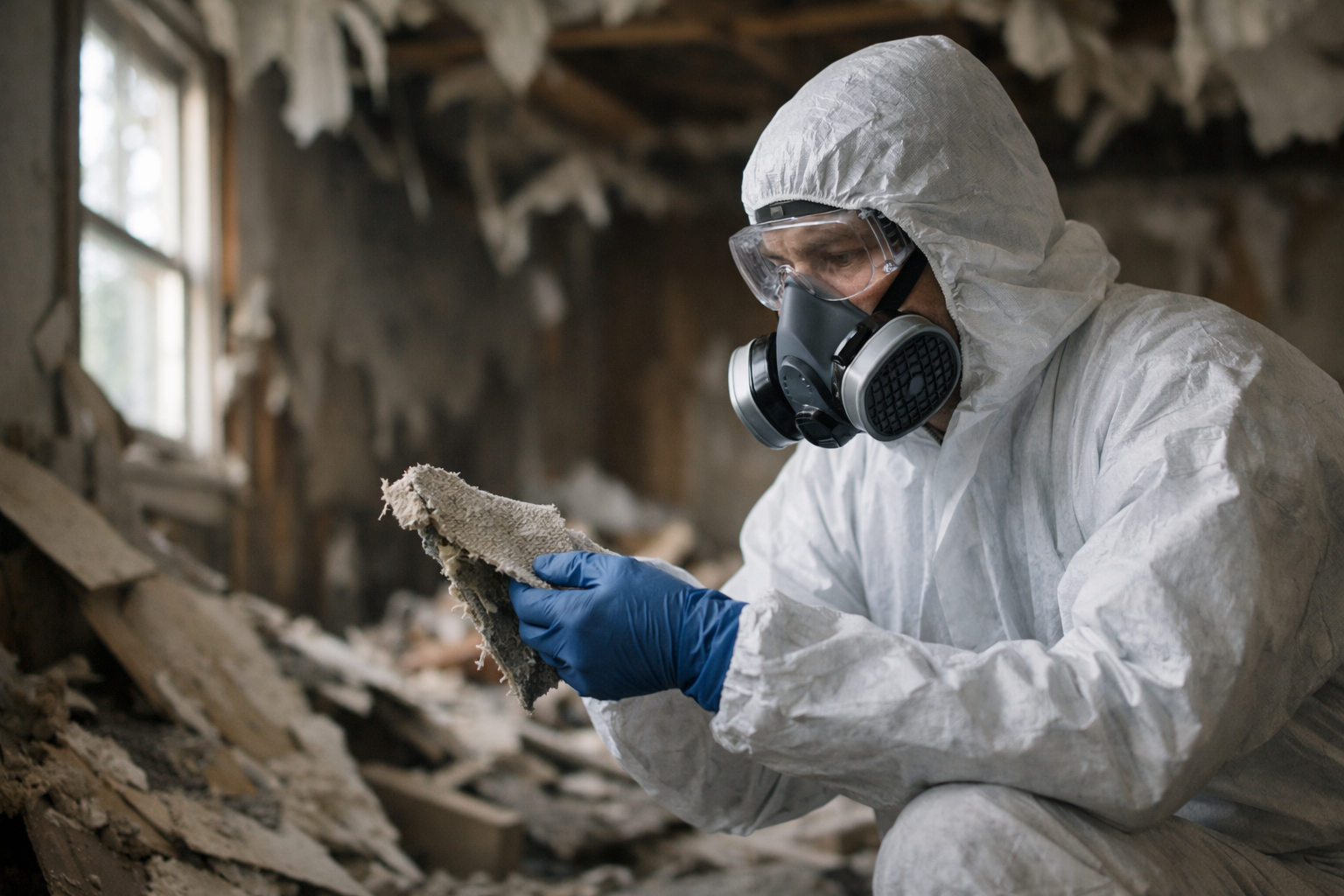
Floods, fires, and tornadoes tear open walls that were sealed for decades. When a home built before 1980 gets damaged, those exposed materials can release asbestos fibers into the air. Asbestos disposal after a disaster is not a task for a shop vacuum and a trash bag.
This post covers how to identify suspect materials, what regulations changed in 2024, and the exact steps for safe removal. You will learn when to call a licensed abatement contractor and how to find one fast.
Why Post-Disaster Debris Raises the Asbestos Risk
Asbestos is a fibrous mineral used in building products until it was heavily restricted. When intact, it stays locked inside walls, floors, and pipes. When crushed or broken, it turns into airborne dust.
Disasters create exactly that damage. Collapsed ceilings, burned drywall, and shattered floor tile all crush asbestos-containing materials at once.
Homes and commercial buildings constructed before 1980 carry the highest odds. Common sources include:
- Vinyl floor tiles (9-inch and 12-inch tiles are frequent culprits)
- Popcorn ceiling texture sprayed before 1978
- Pipe and boiler insulation wrapped in white or gray cladding
- Cement siding and roofing shingles (transite board)
- Joint compound and drywall from mid-century builds
- HVAC duct wrap and furnace tape
A single broken transite panel can shed fibers across a flooded basement. That is why post-disaster safety starts with treating older debris as suspect until tested.
Step One: Do Not Disturb Suspect Materials
The first rule of asbestos handling is to stop moving it. Dry debris releases the most fibers when swept, cut, or hauled.
Keep people and pets out of the affected area. Turn off forced-air heating and cooling to stop fibers from spreading room to room.
Do not:
- Sweep or vacuum visible dust with a standard vacuum
- Break tile or drywall to fit it in bags
- Use power tools on damaged materials
- Track debris outside on shoes or clothing
Step Two: Get Materials Tested Before Removal
You cannot identify asbestos by sight alone. A lab test confirms whether fibers are present.
Certified inspectors collect small samples and send them for polarized light microscopy (PLM) analysis. Results usually return within a few business days. Rush testing runs faster if your insurance claim needs it.
Testing matters for two reasons. It tells you what handling rules apply, and it creates documentation for your insurer and local landfill.
Updated Asbestos Regulations You Need to Know
In March 2024, the EPA finalized a ban on chrysotile asbestos, the last form still imported into the United States. This affects new products, not the old materials already in your walls.
For disaster cleanup, the rules that govern you are the EPA’s NESHAP standards and your state’s specific requirements. Key points:
- Any project over 160 square feet or 260 linear feet of asbestos material usually requires licensed abatement.
- Materials must be kept wet during removal to suppress fibers.
- Waste must go to a landfill approved to accept asbestos.
- Many states require a 10-day notification before large-scale removal begins.
Disaster zones sometimes get emergency waivers on notification timing. Your local air quality district or health department confirms current allowances.
Step Three: Safe Asbestos Disposal Procedures
Asbestos disposal follows a wet-and-seal method that keeps fibers grounded. Below are the numbered steps a licensed crew uses.
- Seal the work area. Contractors hang 6-mil polyethylene sheeting and set up negative-air machines with HEPA filters.
- Wear proper protection. Crews use P100 respirators and disposable coveralls, not paper dust masks.
- Wet the material. A garden sprayer with water and a surfactant soaks debris before it is touched.
- Remove in whole pieces. Materials come out intact whenever they can, avoiding breakage.
- Double-bag the waste. Debris goes into two layers of 6-mil polyethylene bags, each labeled with asbestos warnings.
- Transport by approved haulers. Bagged waste travels to a landfill permitted for asbestos, with a manifest documenting the load.
Standard trash pickup will not accept asbestos. Dumping it illegally carries fines that reach five figures in many states.
What About Small Amounts?
Some states allow homeowners to remove small quantities themselves. Even then, the wet-and-double-bag method still applies. Call your local landfill first to confirm they accept residential asbestos and what packaging they require.
When to Hire a Licensed Abatement Contractor
Hire a licensed pro when damage covers a large area, when insulation is involved, or when fibers may already be airborne. Fire-damaged asbestos is especially risky because heat makes materials crumble easily.
A qualified abatement contractor gives you three things a general cleanup crew cannot:
- State licensing that meets legal removal requirements
- Air monitoring to confirm the space is safe afterward
- Disposal manifests that document lawful handling
How to Vet a Provider on Restoration Locator
Finding the right contractor fast matters after a disaster. Use the directory filters at https://restorationlocator.com to narrow your choices.
- Filter listings by location to find crews that serve your disaster zone.
- Check reviews for mentions of asbestos abatement and insurance work.
- Sort by service type to isolate providers who list asbestos removal, not just general cleanup.
- Confirm the provider holds current state abatement licensing before signing.
Protecting Your Health During Cleanup
Asbestos-related illness can take decades to appear, which makes prevention the only real defense. Diseases linked to exposure include asbestosis, lung cancer, and mesothelioma.
Never let curiosity pull you into a damaged, dusty space without protection. If you already entered a suspect area, bag your clothing separately and shower before re-entering clean parts of your home.
Post-disaster safety depends on patience. Waiting a few days for testing beats a lifetime of health risk.
Key Takeaways
Treat any pre-1980 debris as suspect, avoid disturbing it, and get materials lab-tested before removal. Safe asbestos disposal means wetting materials, double-bagging in 6-mil polyethylene, and hauling waste to an approved landfill.
Large or fire-damaged jobs call for a licensed abatement contractor with proper air monitoring. Browse Disaster Cleanup & Restoration listings at https://restorationlocator.com and start your search today.