
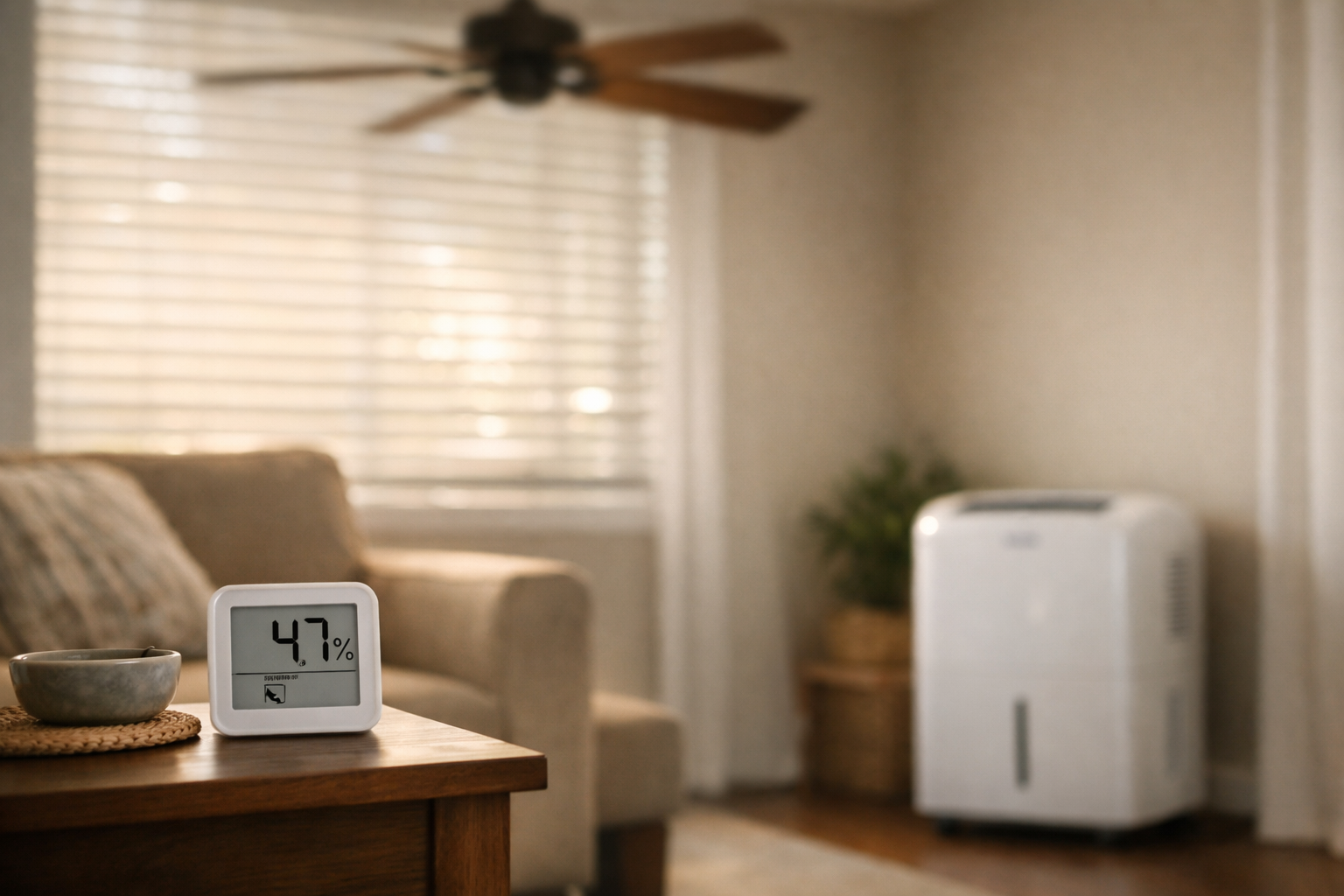
August humidity behaves differently than June or July humidity. The air holds more moisture, nights stay warmer, and your air conditioner struggles to keep pace. That combination makes summer humidity management harder during the last weeks of the season than at any other point.
Below you will find tactics matched to late-summer conditions, warning signs that moisture is winning, and the point where the problem shifts from a comfort issue to structural damage.
Why Late Summer Humidity Hits Harder
Late summer air carries a higher dew point than early summer air. Dew point is the temperature at which water vapor condenses into liquid. When the dew point climbs above 65°F, your home feels sticky no matter what your thermostat reads.
In August, many regions see dew points above 70°F for days at a stretch. Your AC removes heat well but removes moisture poorly during these stretches. The result is a house that feels clammy at 74°F.
Three conditions stack up in late summer:
- Warmer overnight lows stop the natural drying that cooler nights provide.
- Saturated soil from a full season of rain pushes moisture up through slabs and crawl spaces.
- Oversized air conditioners cool the air fast, then shut off before pulling much water out.
Set Your Indoor Humidity Target
Keep indoor relative humidity between 30% and 50%. The Environmental Protection Agency points to this band as the range where mold growth slows and dust mites decline. During late summer, aim for the lower half of that range.
Buy a $15 digital hygrometer and place it in your most humid room. Basements and ground-floor bathrooms read highest. Check it morning and evening for a week to find your problem hours.
What Different Readings Mean
- Below 50%: Comfortable and safe. Hold your current settings.
- 50% to 60%: Warning zone. Condensation starts on cold surfaces.
- Above 60%: Mold-friendly. Act within days, not weeks.
Practical Steps for Home Moisture Control
Effective home moisture control in August means attacking sources, not just symptoms. Follow this order.
- Run bathroom and kitchen exhaust fans longer. Keep them on for 20 minutes after a shower or boiling pot. Late-summer air outside cannot absorb the steam you push into it, so vent it fully.
- Add a standalone dehumidifier in the dampest room. A 50-pint unit handles most basements. Empty it or route the hose to a drain daily during peak weeks.
- Fix the “short cycling” AC problem. If your unit blasts cold then stops within 10 minutes, it is not dehumidifying. Ask an HVAC tech to check the fan speed setting.
- Seal crawl space vents and add a vapor barrier. Open vents let humid August air condense on cool ductwork underneath your floor.
- Cover cooking pots and take shorter showers during the stickiest afternoons. Every gallon of water vapor you avoid is one your dehumidifier skips.
Target the Rooms That Fail First
Not every room needs equal attention. Late summer moisture problems cluster in predictable spots.
- Basements: Cool walls meet warm humid air and sweat. Watch the base of exterior walls.
- Closets on north walls: Poor air movement plus cool surfaces breed mildew on shoes and leather.
- Laundry rooms: A single dryer load dumps a pound of water vapor if the vent leaks.
Warning Signs Moisture Is Winning
Musty smell is the earliest signal that late-summer humidity has taken hold. Your nose detects mold spores before you see them. Trust it.
Other signs mean the problem is past the comfort stage:
- Black or green spots on bathroom ceilings, grout, or window sills.
- Peeling paint or bubbling drywall on ground-floor walls.
- Warped wood floors that cup at the edges of each board.
- Condensation trails running down interior windows in the morning.
- Rusty spots on metal fixtures or exposed nail heads.
Warped floors and bubbling drywall mean moisture has entered building materials. At that stage, a dehumidifier alone cannot reverse the damage.
When Humidity Becomes a Restoration Problem
Call a restoration provider once mold covers more than 10 square feet. The EPA sets that threshold for a reason. Below it, you can clean small patches yourself. Above it, spores spread faster than you can contain them.
Two late-summer scenarios push homeowners past the DIY line:
- A hidden slab leak under carpet, feeding constant moisture no dehumidifier can outrun.
- A crawl space that flooded during an August storm and never fully dried.
Both cases need moisture mapping and containment, not just fans. Restoration crews carry moisture meters that read inside walls without cutting them open.
How to Pick the Right Provider
Not every restoration company handles humidity and mold at the same skill level. Use the directory filters to narrow your search fast.
- Filter listings by mold remediation to skip firms that only handle fire or water extraction.
- Sort by location so a crew can reach you before the mold spreads further.
- Check reviews for mentions of moisture testing and follow-up visits.
- Confirm certification such as IICRC training before you book.
Habits That Keep Humidity Down All Season
Small daily choices compound over a humid month. Build these into your late-summer routine.
- Run your AC fan on “auto,” not “on.” The “on” setting re-evaporates water off the coil back into your rooms.
- Dry laundry outside on breezy afternoons instead of indoors.
- Move firewood and mulch away from the foundation. Both hold moisture against your walls.
- Open windows only when the outdoor dew point drops below 60°F, usually early morning after a cold front.
The dew-point rule matters most in late summer. Opening windows on a muggy August evening pours moisture into a house you just spent all day drying.
Key Takeaways
Late summer demands tighter summer humidity management because higher dew points and saturated soil overwhelm standard cooling. Keep indoor humidity under 50%, attack moisture at its source, and watch for musty smells and warped floors. Once mold passes 10 square feet or hidden leaks appear, bring in a restoration crew with moisture-mapping tools.
Ready to find a mold and moisture specialist near you? Browse Disaster Cleanup & Restoration listings at https://restorationlocator.com and start your search today.
Sources
- U.S. Environmental Protection Agency – Mold Cleanup in Your Home
- U.S. Environmental Protection Agency – Mold Remediation Guide (10 sq ft guidance)
- U.S. Department of Energy – Humidity Control
- Centers for Disease Control and Prevention – Dampness and Mold Facts