
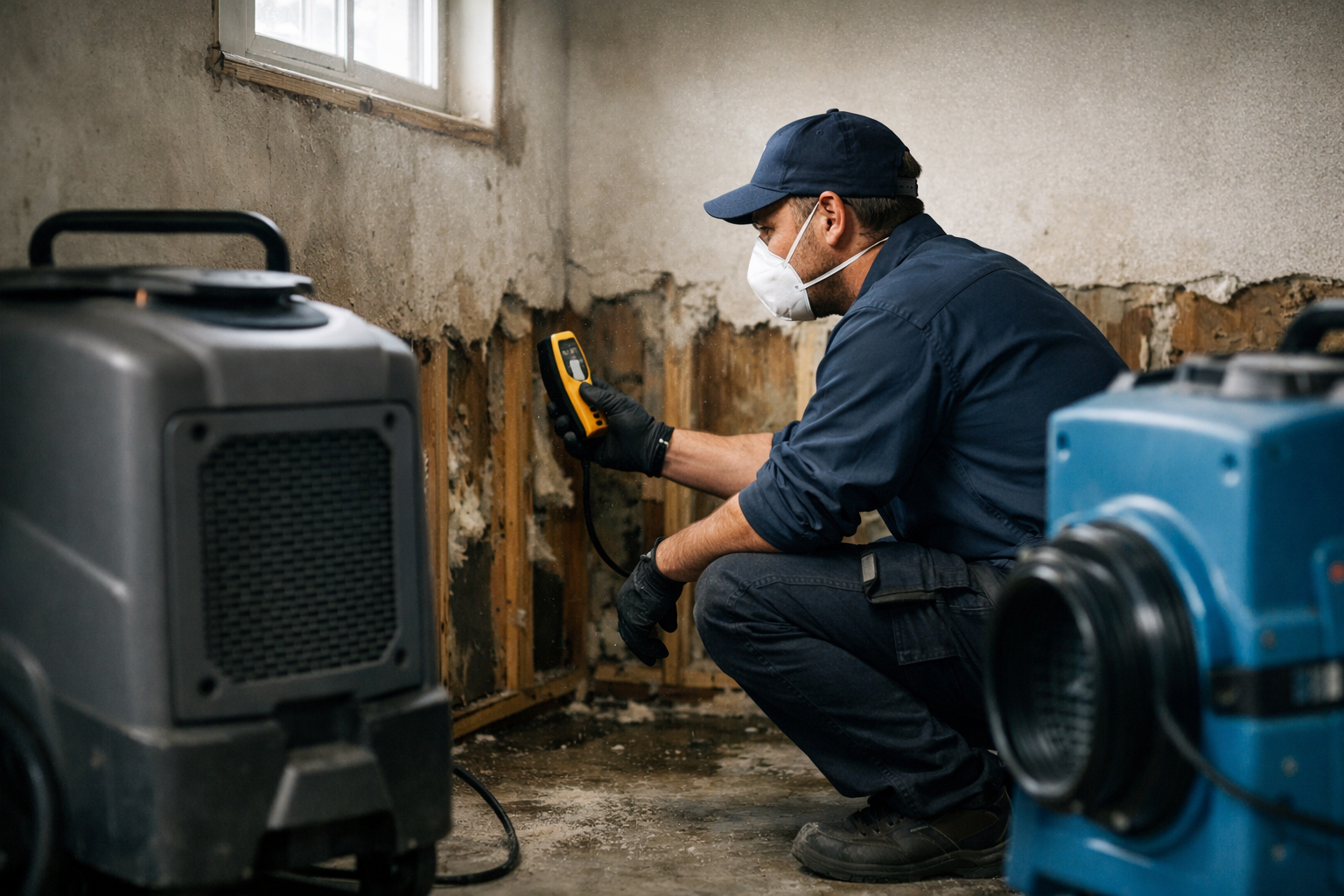
The musty smell that lingers weeks after your basement flood is not just an annoyance. It signals active bacterial growth and trapped moisture inside materials you cannot see. Odor removal after water damage targets the source of that smell, not the smell itself.
Most homeowners assume drying out a room ends the problem. It rarely does. This post covers what causes post-flood odors, why store-bought sprays fail, and how to pick a specialist who fixes the root cause.
Why Water Damage Odors Are a Warning Sign, Not a Nuisance
Water damage odor is the byproduct of microbial activity feeding on wet organic materials. When drywall, carpet padding, and wood stay damp past 48 hours, bacteria and mold colonies release gases called microbial volatile organic compounds (MVOCs).
That “old basement” smell is those gases. It means something is still wet and still growing behind your walls.
Here is the part rarely discussed: a returning odor after cleanup usually means the drying was incomplete. The smell is your early-warning system for hidden moisture pockets.
Common Sources That Trap Odor
- Carpet padding — holds water long after the carpet surface feels dry
- Wall cavities — insulation wicks moisture upward and stays saturated
- Subflooring — plywood and particleboard swell and hold water at the seams
- HVAC ductwork — spreads spores and smell to rooms that never flooded
The Concern No One Warns You About
Sewage or gray-water floods leave behind odor even after the visible mess is gone. A category 2 or 3 water event deposits bacteria into porous materials that cleaning alone will not reach.
A house can look spotless and still smell foul six months later. That gap between “looks clean” and “smells clean” is where most DIY attempts fail.
Why DIY Odor Removal Water Damage Fixes Fall Short
Air fresheners and fans mask odor for hours, then it returns stronger. They treat the air, not the saturated material producing the gas.
Bleach is another common mistake. It removes surface stains but does not penetrate wood or drywall, and the water in bleach adds more moisture to an already wet material.
Here is what happens with a typical DIY attempt after a washing-machine leak:
- The homeowner mops the floor and runs a box fan for two days.
- The carpet surface dries and the smell fades.
- Two weeks later, the musty odor returns near the baseboard.
- The padding and subfloor were never dried, and mold has started.
The lesson: surface treatment cannot fix a saturation problem.
What Professional Odor Cleaning Actually Involves
Professional odor cleaning is a moisture-first method that removes the source before treating the air. Specialists locate hidden water, dry it completely, then neutralize odor at the molecular level.
The equipment makes the difference. A crew arriving after a flood brings tools no hardware store stocks.
Tools That Separate Specialists From DIY
- Moisture meters and thermal cameras — find wet spots behind walls without demolition
- Hydroxyl generators — break down odor molecules safely in occupied rooms
- Ozone machines — used in sealed, vacant spaces for heavy contamination
- Thermal fogging — penetrates the same porous paths the smoke or water traveled
- Commercial air scrubbers — capture spores and MVOCs with HEPA filtration
A Typical Specialist Sequence
- Inspect and map moisture with meters to find every wet cavity.
- Remove unsalvageable materials like soaked padding and swollen drywall.
- Dry the structure with air movers and dehumidifiers to target readings.
- Clean and treat surfaces with antimicrobial agents.
- Neutralize residual odor using fogging or hydroxyl treatment.
- Verify results by re-checking moisture and confirming the smell is gone.
The Benefits of Getting Odor Removal Right
Correct odor removal water damage work protects both your health and your property value. Lingering MVOCs and mold spores irritate airways and can trigger asthma in sensitive people.
The financial side matters too. Buyers and inspectors notice musty smells, and unresolved odor lowers appraisals and slows sales.
Direct benefits include:
- Removal of the health hazard, not just the symptom
- Prevention of new mold growth by eliminating trapped moisture
- Protection of resale value from persistent odor stigma
- Documentation for insurance claims and future disclosures
How to Choose an Odor Removal Provider on Restoration Locator
Pick a provider that treats odor as a moisture problem first. The right specialist inspects before quoting and explains where the smell originates.
Ask any candidate three questions before hiring:
- Will you use moisture meters to find the source, or just treat the air?
- What method do you use for odor neutralization, and why?
- Do you re-test moisture levels before declaring the job done?
A vague answer to question one is a red flag. It suggests surface treatment that will not last.
Directory Filters That Save Time
Use these steps on Restoration Locator to shorten your search:
- Sort by location to find crews that respond fast in your area
- Filter listings by water damage and odor removal specialties
- Check reviews for mentions of returning smells or repeat visits
- Compare providers that list certifications and moisture-testing methods
Reviews mentioning “the smell came back” tell you more than any marketing claim. Prioritize crews with feedback about lasting results.
When to Call Instead of Waiting
Call a specialist the moment you notice odor returning after your own cleanup. The returning smell means moisture and microbial growth are active behind the surface.
Waiting turns a drying job into a demolition job. What could have been a two-day treatment becomes wall removal and mold remediation.
Act on the first returning whiff, not the third.
Key Takeaways
Post-flood odor is a signal of hidden moisture and microbial growth, not a cosmetic issue. DIY sprays and fans mask the smell while the source keeps producing it. A specialist finds the water, dries it, and neutralizes odor at the source.
Compare odor removal specialists by location, reviews, and testing methods on Restoration Locator. Start your search now and stop the smell at its source.
Sources
- U.S. EPA – Mold Cleanup in Your Home
- CDC – About Mold and Your Health
- U.S. EPA – Volatile Organic Compounds’ Impact on Indoor Air Quality