Why Crime Scene Cleanup Goes Beyond Cleaning
Professional crime scene cleanup serves as a barrier between contaminated environments and public health threats. When violent crimes, accidents, or traumatic events occur, they leave behind biological materials that pose serious health risks to entire communities.
Blood, bodily fluids, and tissue fragments contain pathogens that can survive on surfaces for weeks or months. Without proper remediation, these biohazards can spread infectious diseases throughout neighborhoods.
The Hidden Health Threats in Crime Scenes
Crime scenes contain multiple categories of biological contaminants that threaten community health. Each type requires specific protocols to eliminate safely.
Bloodborne Pathogens
Human blood can carry hepatitis B, hepatitis C, and HIV for extended periods. These viruses remain infectious on dried surfaces at room temperature for up to seven days.
First responders, property owners, and nearby residents face exposure risks when scenes aren’t properly decontaminated. A single contaminated needle or glass fragment can transmit disease through accidental contact.
Airborne Contaminants
Decomposition releases harmful bacteria and toxins into the air. These airborne particles can travel through ventilation systems, affecting adjacent properties and public spaces.
Methicillin-resistant Staphylococcus aureus (MRSA) and Clostridium difficile spread rapidly in contaminated environments. Both bacteria cause severe infections that resist standard antibiotic treatments.
How Professional Crime Scene Cleanup Protects Communities
Certified cleanup teams use specialized equipment and protocols that eliminate biohazards completely. Their work prevents contamination from spreading beyond the original scene.
Complete Decontamination Process
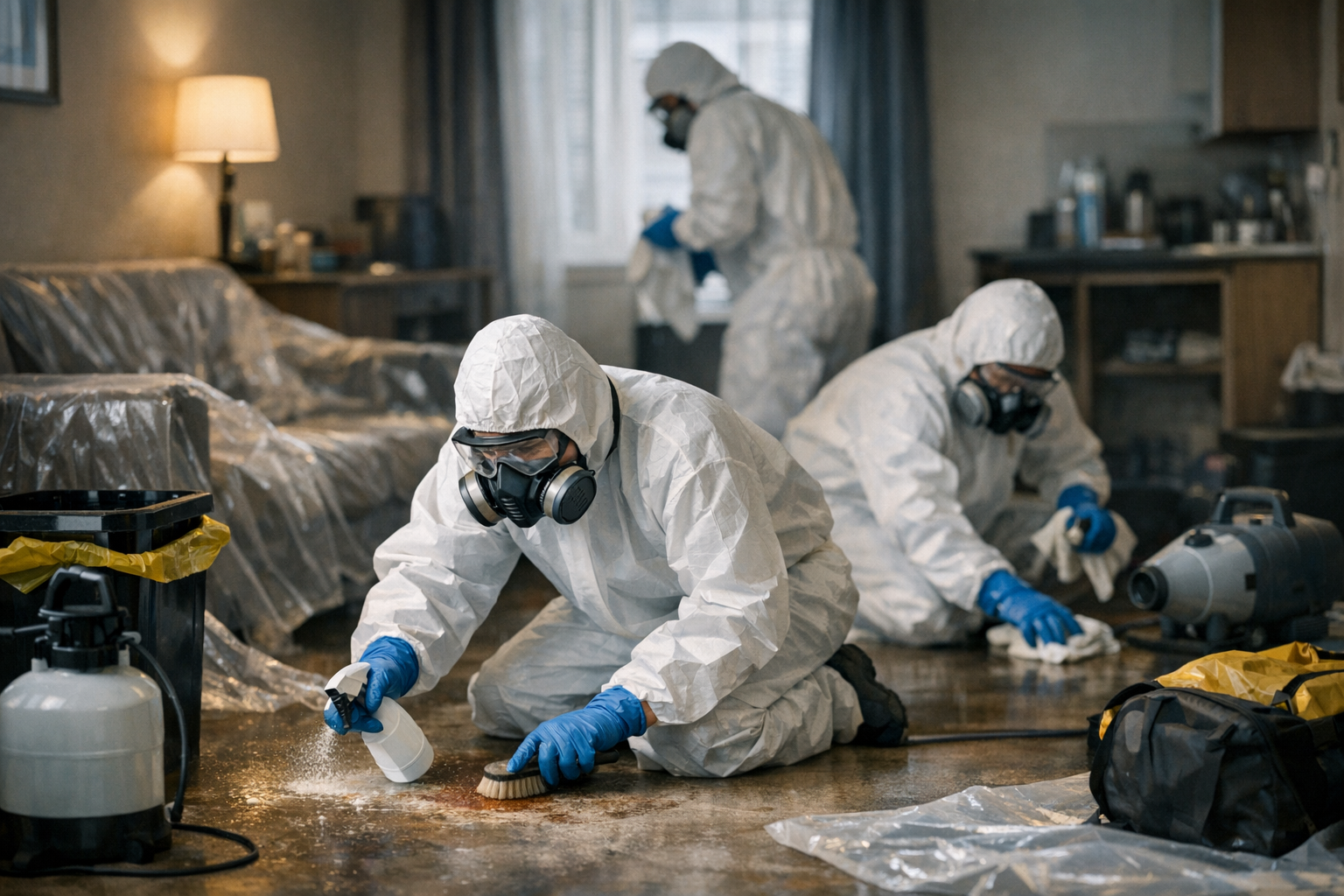
Professional teams follow strict decontamination procedures that protect entire neighborhoods:
- Blood and fluid removal – Industrial-grade equipment extracts all biological materials from porous surfaces
- Antimicrobial treatment – Hospital-grade disinfectants kill remaining pathogens and spores
- Air purification – HEPA filtration systems remove airborne contaminants and odors
- Safe disposal – Contaminated materials are incinerated at licensed medical waste facilities
Preventing Secondary Contamination
Untrained cleanup attempts often spread contamination to new areas. Well-meaning family members or property managers can carry pathogens on clothing, shoes, and equipment.
Professional teams contain contamination using negative air pressure systems and sealed work zones. This prevents biohazards from migrating to clean areas during the cleanup process.
The Community Cost of Inadequate Cleanup
When crime scene cleanup is handled improperly, entire communities bear the consequences. Healthcare systems strain under increased infection rates and emergency room visits.
Real Health Impacts
A contaminated apartment building in Chicago required evacuation of 47 units after improper cleanup allowed MRSA to spread through shared ventilation. Residents faced months of displacement and medical testing.
Property values in affected areas drop significantly when biohazard contamination becomes public knowledge. Insurance claims increase as neighboring properties require additional testing and remediation.
Legal and Financial Consequences
Property owners face liability for health problems caused by inadequate cleanup. Court settlements for pathogen exposure cases average $2.3 million per incident.
Local health departments can condemn entire buildings when contamination spreads beyond the original scene. Remediation costs multiply exponentially once biohazards affect multiple units or properties.
Choosing Qualified Crime Scene Cleanup Services
Not all restoration companies handle biohazard cleanup properly. Communities need providers with specific certifications and equipment for crime scene work.
Required Certifications
Legitimate crime scene cleanup companies hold certifications from the Institute of Inspection, Cleaning and Restoration Certification (IICRC). Technicians complete specialized training in bloodborne pathogen handling and trauma scene management.
Companies must carry proper licensing for medical waste transport and disposal. They need specialized insurance coverage for biohazard work that standard restoration policies don’t provide.
Essential Equipment Standards
Professional teams use equipment designed specifically for biohazard cleanup:
- Personal protective equipment – Full-body suits with supplied air systems protect workers from exposure
- Negative air machines – Specialized units prevent contaminated air from leaving work areas
- Enzymatic cleaners – Medical-grade products break down proteins in blood and tissue
- ATP testing devices – Scientific instruments verify complete biological material removal
When Communities Need Crime Scene Cleanup
Crime scene cleanup needs extend beyond violent crimes to any situation involving biological contamination. Communities benefit when property owners respond quickly to these situations.
Common Scenarios Requiring Professional Help
Unattended deaths create biohazard conditions within 24-48 hours. Body fluids seep into flooring, walls, and HVAC systems, requiring extensive decontamination.
Drug laboratory discoveries expose entire buildings to chemical contamination. Methamphetamine residue causes respiratory problems and skin irritation for anyone entering affected areas.
Hoarding situations often involve human waste, animal remains, and mold growth. These conditions create multiple health hazards that standard cleaning cannot address safely.
The Public Health Investment
Professional crime scene cleanup represents a crucial investment in community health infrastructure. The cost of proper remediation prevents much larger healthcare expenses and property damage.
Quick response prevents contamination from spreading beyond the original scene. Each hour of delay increases the risk of pathogen transmission and secondary contamination.
Communities with access to qualified cleanup services experience faster property value recovery and reduced long-term health impacts. Emergency responders can return to service quickly when scenes are properly remediated.
Finding the Right Crime Scene Cleanup Provider
Property owners and community leaders need reliable ways to locate qualified biohazard cleanup services. Time-sensitive situations require immediate access to certified professionals.
When evaluating providers, verify their specific experience with trauma scene cleanup rather than general restoration work. Look for companies that maintain 24-hour emergency response capabilities and proper medical waste disposal partnerships.
Professional crime scene cleanup protects communities by eliminating biohazards that threaten public health. The specialized knowledge and equipment these teams provide prevents contamination from spreading and causing widespread illness. Browse qualified crime scene cleanup providers in your area at https://restorationlocator.com.