
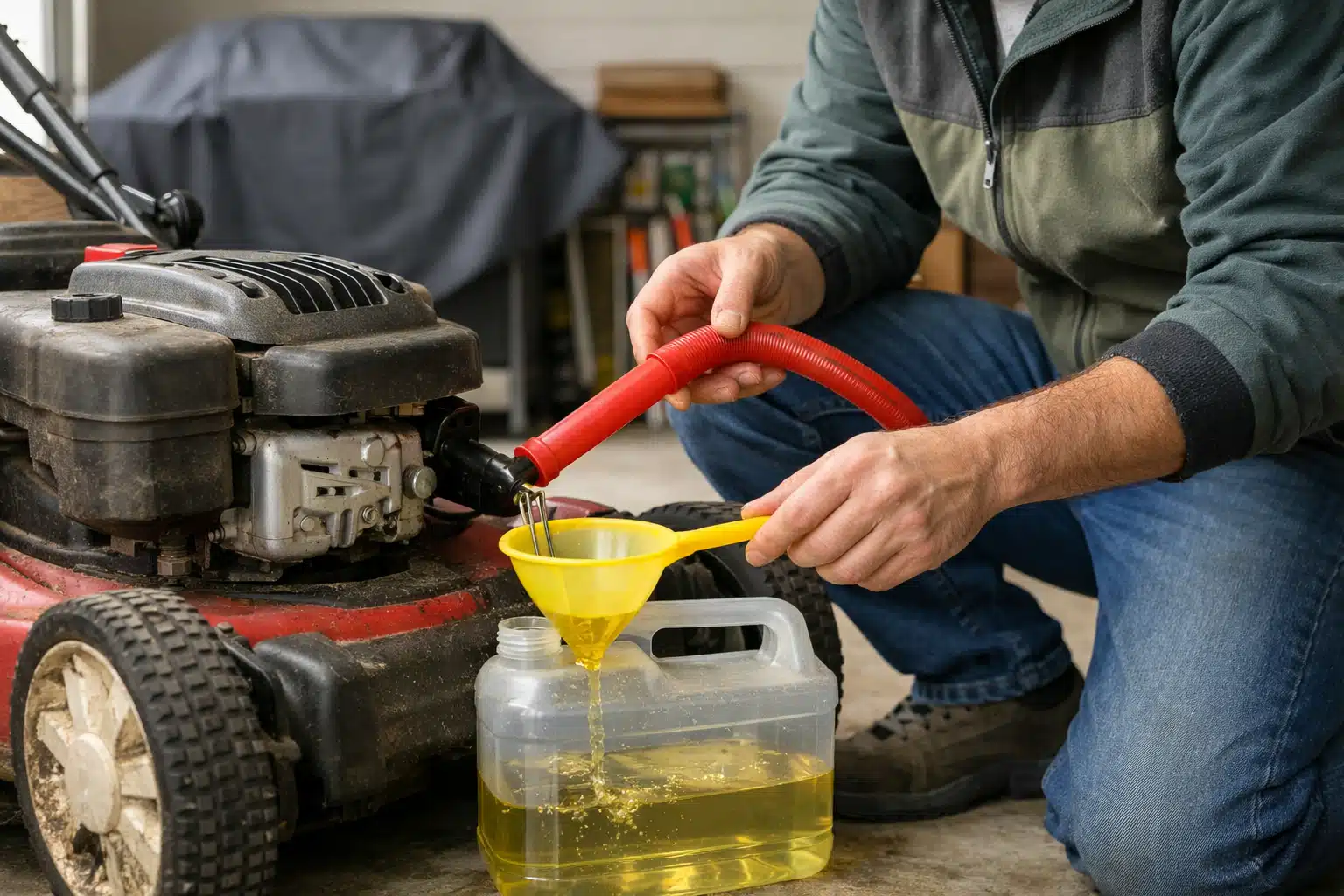
A cracked engine block from frozen water costs more than a new lawn mower. That single oversight ruins thousands of dollars of summer equipment every November. The fix takes an afternoon.
This post shows you how to clean and store outdoor equipment so it survives the cold months intact. You will get step-by-step methods for mowers, grills, patio furniture, and power tools. Follow these winter preparation tips and your equipment starts up fine in spring.
The off-season is when most damage happens quietly. Rust, dry rot, and rodent nests build for months before you notice. Preventing that damage is cheaper than paying restoration crews for water or mold cleanup later.
Why Off-Season Storage Decides Whether Equipment Survives
Equipment fails in storage, not in use. A mower left with gas in the tank gums up its carburetor within 60 days. Patio cushions stored damp grow mold by February.
The three enemies of stored equipment are moisture, stale fuel, and pests. Each one works slowly in a closed shed or garage. Control all three and you remove nearly every cause of winter loss.
Water damage from a leaking garage roof or flooded basement can destroy a full season’s worth of equipment overnight. If that happens, a restoration crew may be your only recovery option.
How to Store Outdoor Equipment: A Step-by-Step Order
Work from the dirtiest items to the cleanest. Start with gas machines, move to grills, then furniture, then hand tools. This order keeps grease and fuel off items you clean last.
- Drain or stabilize fuel in all gas-powered machines.
- Clean and dry every surface before storage.
- Apply protectant to metal, rubber, and wood.
- Seal containers and block rodent entry points.
- Elevate items off concrete floors.
Step 1: Handle Fuel First
Stale gasoline is the top killer of mowers, trimmers, and leaf blowers. Ethanol in pump gas absorbs water and separates over winter. That mix corrodes carburetors and clogs fuel lines.
You have two methods. Run the tank dry by starting the engine and letting it stall. Or fill the tank and add fuel stabilizer, then run it five minutes to circulate.
For a mower you will not touch until April, the stabilizer method works better. A full, stabilized tank leaves no empty space for condensation to form.
Step 2: Clean Every Surface Before It Goes Away
Dried grass clippings hold moisture against mower decks and cause rust. Scrape the underside of your mower with a putty knife after the blade stops. Wear gloves and disconnect the spark plug first.
For grills, burn off residue on high for 15 minutes, then scrub grates with a brush. Empty the grease trap completely. Old grease attracts rodents and can ignite.
Step 3: Protect Metal, Rubber, and Wood
Bare metal rusts fastest in unheated storage. Wipe mower blades and hand tools with a light coat of machine oil. A thin film blocks the humidity swings that cause pitting.
- Metal tools: Coat with oil or spray lubricant.
- Rubber tires and hoses: Inflate tires fully to prevent flat spots.
- Wood handles and furniture: Apply a sealant to stop cracking.
- Batteries: Remove and store at room temperature on a trickle charger.
Storing Specific Summer Equipment
Lawn Mowers and String Trimmers
Remove the blade and sharpen it now, not in spring. Change the oil before storage, since used oil holds acids that corrode engine parts. Store the mower upright, never on its side, to keep oil out of the cylinder.
Grills and Smokers
Disconnect propane tanks and store them outdoors, never in a garage or shed. Propane expands in cold and leaked gas pools in enclosed spaces. Cover the grill body with a fitted cover to keep out moisture.
Patio Furniture and Cushions
Cushions must be bone-dry before storage or they grow mold within weeks. Store fabric items in breathable bags, not sealed plastic. Stack metal and wood furniture off the floor on wooden blocks.
Garden Hoses and Sprinklers
Drain hoses fully and coil them loosely. Trapped water freezes, expands, and splits the hose lining. Blow out in-ground sprinkler lines before the first hard freeze.
Where You Store Matters as Much as How
Concrete floors pull moisture into anything touching them. Place pallets or foam mats under equipment to break that contact. A single pallet under a mower prevents the wheel rust most people blame on age.
Unheated sheds swing between freezing nights and warmer days. That cycle creates condensation on metal and inside fuel tanks. A sealed storage bin with silica gel packs controls moisture around smaller items.
Check your storage space for leaks before loading it. A roof drip or foundation crack that floods the floor can ruin everything inside. Water intrusion is one of the most common reasons homeowners search for cleanup help after winter.
Block Rodents Before They Nest
Mice chew wiring, hoses, and seat cushions for nesting material. A mower’s wiring harness is a favorite target. Steel wool packed into openings stops them from entering engine housings.
- Store seat cushions and fabric in sealed bins.
- Remove any food debris from grills and coolers.
- Set traps near stored equipment, not just on walls.
- Avoid loose rags or paper near engines.
When Storage Goes Wrong: Water and Mold Damage
Even careful storage fails when a pipe bursts or snowmelt floods a garage. Soaked equipment, cushions, and wood develop mold within 48 hours. At that point, cleaning becomes a restoration job, not a weekend chore.
Mold on porous items like cushions and wood can spread to walls and framing. A flooded storage shed needs drying and treatment to stop that spread. Restoration crews have moisture meters and drying equipment homeowners lack.
If your storage space floods this winter, you can find local water and mold specialists on https://restorationlocator.com. Filter listings by location, sort by service type, and check reviews before you call. Acting in the first two days limits how far damage spreads.
A Quick Pre-Winter Checklist
- Stabilize or drain all fuel.
- Clean grass, grease, and dirt off every surface.
- Dry fabric and cushions completely.
- Oil metal and seal wood.
- Remove and charge batteries indoors.
- Elevate items off concrete.
- Block rodent entry with steel wool.
- Inspect storage space for leaks.
Final Takeaways
The right way to store outdoor equipment comes down to removing moisture, stale fuel, and pests before the cold sets in. An afternoon of cleaning and sealing saves hundreds in spring repairs. These winter preparation tips keep your mower, grill, and furniture ready for next season.
If winter water or mold damages your stored equipment despite your best effort, help is close. Browse Disaster Cleanup & Restoration listings now at https://restorationlocator.com and find a local crew by location and reviews.