
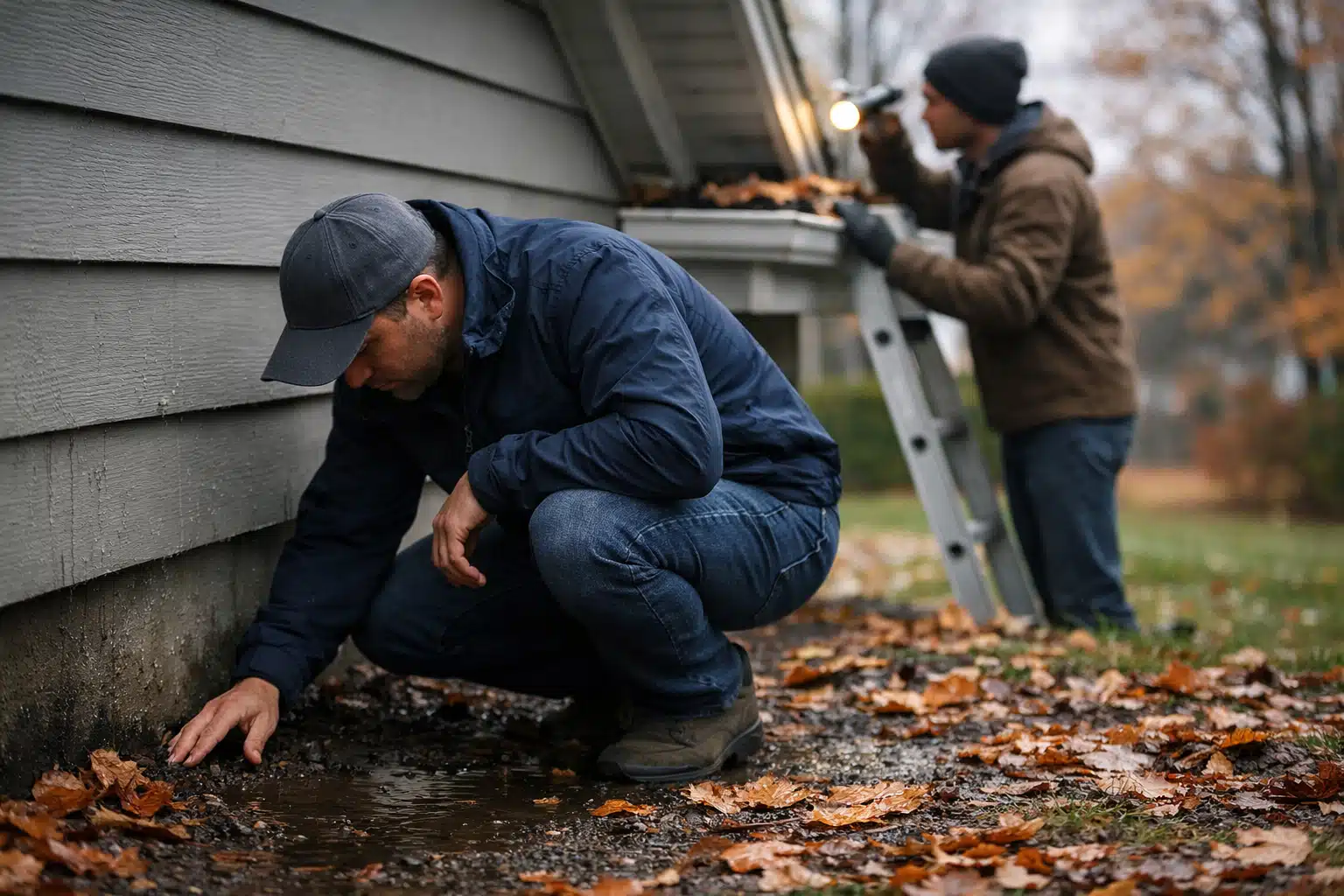
A late November rainstorm leaves more than puddles on your driveway. Clogged gutters packed with wet leaves push water against your foundation and under your roofline. This post walks you step-by-step through autumn water damage repair, from the first inspection to hiring the right cleanup crew.
Late-season storms carry risks that summer rain does not. Cooler temperatures slow evaporation, so trapped moisture lingers and feeds mold. Fallen leaves block drainage paths that worked fine in July.
Why Late Autumn Rainstorms Cause Different Water Damage
Autumn storms attack homes already weakened by seasonal debris. Leaf-packed gutters overflow and send water sheeting down exterior walls. Soggy soil around the foundation stays saturated for days after the clouds clear.
Three conditions make autumn flooding harder to dry out:
- Low temperatures slow evaporation inside walls and crawlspaces.
- Shorter daylight keeps shaded exterior areas damp longer.
- Leaf buildup blocks gutters, downspouts, and yard drains.
A basement that dried in a day during summer may stay wet for a week in November. That extended dampness is where mold takes hold.
Post-Rainstorm Assessment: Where to Look First
A post-rainstorm assessment is a room-by-room check for standing water, moisture, and structural damage after a storm. Start within 24 hours. Mold can begin growing in 24 to 48 hours on wet drywall and wood.
Start at the Top
Check your attic and roofline first. Look for water stains spreading across ceiling corners near exterior walls. Press on soft spots in drywall to find hidden saturation.
Shine a flashlight along attic rafters and sheathing. Dark streaks or damp insulation point to a roof leak worsened by leaf-clogged valleys.
Work Down to the Basement
Basements and crawlspaces flood first during saturated-soil storms. Walk the perimeter and feel the base of foundation walls. Damp concrete and a musty smell both signal seepage.
Pull back a corner of carpet near exterior walls. Wet padding underneath means water traveled further than the surface shows.
Inspect Windows and Door Frames
Wind-driven autumn rain forces water past aging weatherstripping. Check the sills and corners of every window that faces the storm direction. Peeling paint and swollen trim mark entry points.
A Step-by-Step Autumn Water Damage Repair Plan
Follow these steps in order. Skipping the drying phase is the most common mistake that leads to mold weeks later.
- Stop the water source. Clear clogged gutters and downspouts before you address interior damage.
- Document everything. Photograph wet areas, damaged items, and water lines for your insurance claim.
- Remove standing water. Use a wet/dry vacuum or a sump pump for anything deeper than an inch.
- Pull out soaked materials. Remove wet carpet padding, baseboards, and the lower foot of saturated drywall.
- Dry the space aggressively. Run dehumidifiers and fans continuously for three to five days.
- Check moisture levels. A moisture meter reading above 16 percent in wood framing means the area is still too wet.
- Treat for mold. Apply an antimicrobial to studs and subfloor before rebuilding.
- Rebuild. Replace drywall, insulation, and flooring only after readings confirm dry framing.
Cold autumn air holds less moisture, which slows natural drying. A dehumidifier does the work the weather no longer will.
When to Call a Restoration Crew
Some autumn water damage is a weekend fix. Other situations need equipment and training you do not have at home. Call a restoration company when any of the following apply:
- Standing water covers more than one room.
- Water sat for more than 48 hours before you found it.
- You see mold larger than a 10-square-foot patch.
- Sewage or contaminated water entered the home.
- Structural wood feels soft or warped.
Contaminated floodwater carries bacteria that household cleaners cannot neutralize. Crews use commercial air movers and antimicrobial foggers that dry and sanitize faster than rental gear.
How to Choose a Restoration Provider on Restoration Locator
The right crew matters more than the fastest one. Use the directory filters on Restoration Locator to shorten your list.
- Sort by location to find crews that can reach you within hours, not days.
- Check reviews for mentions of water extraction and mold remediation, not just general cleanup.
- Filter by certification such as IICRC-trained technicians for moisture control work.
- Confirm 24/7 availability since autumn storms rarely wait for business hours.
Ask any provider two questions before hiring. Do they take moisture-meter readings before rebuilding? Do they work directly with your insurer on documentation?
Red Flags to Avoid
Skip any company that quotes a repair price without inspecting the site. Hidden moisture behind walls changes the scope every time. A firm that rebuilds before drying is setting you up for a mold claim next spring.
Prevent Autumn Water Damage Before the Next Storm
Prevention costs far less than repair. A single afternoon of maintenance in October stops most late-season flooding.
- Clear gutters and downspouts of leaves twice each autumn.
- Extend downspouts at least four feet from the foundation.
- Grade soil to slope away from the house.
- Test your sump pump before the first heavy rain.
- Seal visible cracks in foundation walls and window frames.
Watch your yard during the next downpour. Pooling water near the foundation shows you exactly where the next leak will start.
Key Takeaways
Autumn water damage repair depends on speed and thorough drying, because cold weather traps moisture that feeds mold within two days. Start your post-rainstorm assessment at the roofline and work down to the basement, documenting everything for insurance. For flooding beyond one room or water that sat for days, bring in a certified crew.
Browse Disaster Cleanup & Restoration listings on Restoration Locator and start your search today.