
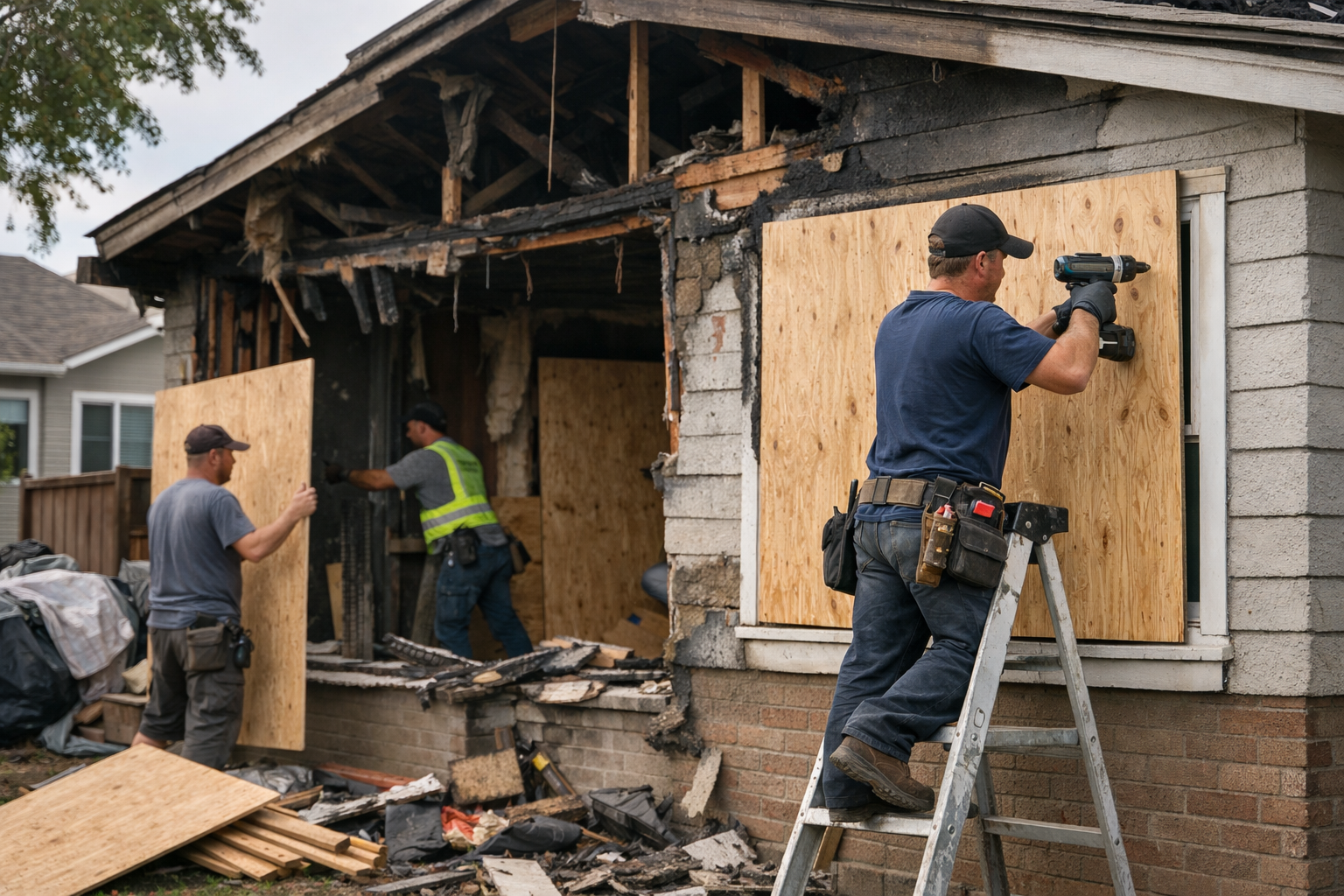
A fire-damaged home with an open front wall is a target within hours, not days. Looters, curious neighbors, and stray animals move fast once a property looks abandoned. That is why post-disaster home security matters as much as the cleanup itself.
The damage you can see is rarely the whole story. Broken windows, missing doors, and holes in the roof invite a second wave of loss that insurance may not fully cover.
This article covers the security steps that stop that second wave, and how to find a provider who handles them correctly.
Why Post-Disaster Home Security Cannot Wait
Post-disaster home security is the set of measures that protect a damaged property from theft, weather intrusion, and liability until repairs are complete. It starts the moment the fire trucks leave or the floodwater recedes.
An unsecured home creates three distinct risks:
- Theft and vandalism — copper piping, appliances, and salvageable belongings disappear from open structures.
- Progressive damage — rain through a burned roof turns a repairable frame into a total loss.
- Liability — a child who wanders into an unstable structure can trigger a claim against you.
Insurance adjusters expect owners to take reasonable steps to limit further loss. Skipping them can reduce your payout.
The 48-Hour Window
Most secondary loss happens in the first two days after a disaster. A house fire in a residential neighborhood draws attention immediately, and word travels.
Emergency board-up and tarping within this window is the single strongest defense against compounding damage.
Core Security Measures That Prevent Further Loss
The right measures depend on the disaster type, but four steps apply to nearly every damaged home.
1. Board Up Openings
Board-up seals broken windows, missing doors, and blown-out wall sections with plywood. It blocks entry and keeps out wind-driven rain.
A proper board-up is screwed into the frame, not nailed to trim that pulls away. Poorly attached boards fail in the first storm and leave you exposed again.
2. Roof Tarping
Roof tarping covers holes from fire, fallen trees, or wind damage with reinforced poly sheeting. Water intrusion is the leading cause of a repairable home becoming a demolition.
Tarps should be anchored with furring strips, not weighted with bricks. A tarp that flaps loose in a night storm protects nothing.
3. Temporary Fencing
Temporary fencing marks the property line and keeps people out of a structurally unsound building. It matters most after fires that leave weakened floors and collapsed sections.
Fencing also signals to insurers that you took the liability risk seriously.
4. Secure or Remove Valuables
Salvageable items left in an open home rarely stay there. Move jewelry, documents, firearms, and electronics off-site as soon as it is safe to enter.
Photograph everything before you move it. That record supports your claim and prevents disputes later.
Security Steps by Disaster Type
Different disasters expose your home in different ways. Match your measures to the threat.
After a House Fire
- Board up windows and doors damaged by heat or firefighter entry.
- Tarp roof holes cut for ventilation during the fire.
- Fence off collapsed or charred sections with unstable footing.
After a Flood
- Secure the property before water fully recedes to deter looters.
- Lock or board lower-level openings where water forced doors open.
- Remove valuables from upper floors that stayed dry.
After Storm or Wind Damage
- Tarp roof sections stripped of shingles or punctured by debris.
- Board any windows shattered by flying objects.
- Clear and mark downed power lines before anyone approaches.
How to Vet a Provider for Home Safety Restoration
Home safety restoration combines security work with the repairs that make a house livable again. Not every cleanup company handles the board-up and tarping side correctly.
Use these criteria when reviewing providers on a directory:
- 24/7 emergency response. Security work in the 48-hour window requires a crew that answers after hours.
- Board-up and tarping listed by name. Confirm the company does this work directly, not as a subcontracted afterthought.
- Insurance claim familiarity. A provider who documents security steps helps protect your payout.
- Verified reviews mentioning speed. Look for feedback that names quick response, not just quality repairs.
- Local presence. A crew nearby reaches your property faster during the window that matters.
Using Directory Filters to Narrow Your Search
On Restoration Locator, you can sort listings by location to find crews closest to your address. Filter by disaster type to match a provider to your fire, flood, or storm damage.
Check reviews on each listing for mentions of emergency board-up and response time. A company that shows up in three hours beats one with polished repairs but a two-day wait.
Documenting Security Measures for Your Insurance Claim
Every security step you take should be recorded. Adjusters reward owners who limit further loss and penalize those who leave a home exposed.
Keep this record:
- Timestamped photos of the damage before and after board-up or tarping.
- Receipts and invoices for all emergency security work.
- A written log of dates and times each measure was completed.
Most policies reimburse reasonable emergency mitigation costs. Save every document until your claim closes.
Common Mistakes That Lead to Second Losses
Owners who mean well still lose property to avoidable errors.
- Waiting to secure the home until repairs are scheduled — the gap is when theft happens.
- Using tarps as a permanent fix — poly sheeting degrades in weeks, not months.
- Leaving valuables visible through gaps in boarding.
- Assuming a locked door is enough when windows sit broken beside it.
Each of these turns a manageable claim into a larger one.
Key Takeaways
Post-disaster home security stops the second wave of loss that follows fire, flood, and storm damage. Board up openings, tarp the roof, fence unstable areas, and move valuables within the first 48 hours.
Choose a provider who handles security work directly, responds fast, and documents everything for your claim.
Start your search by browsing Disaster Cleanup & Restoration listings at https://restorationlocator.com and filter by your location and disaster type.
Sources
- Ready.gov – Home Fires
- FEMA – Individual Assistance Program
- Insurance Information Institute – Filing a Homeowners Claim