
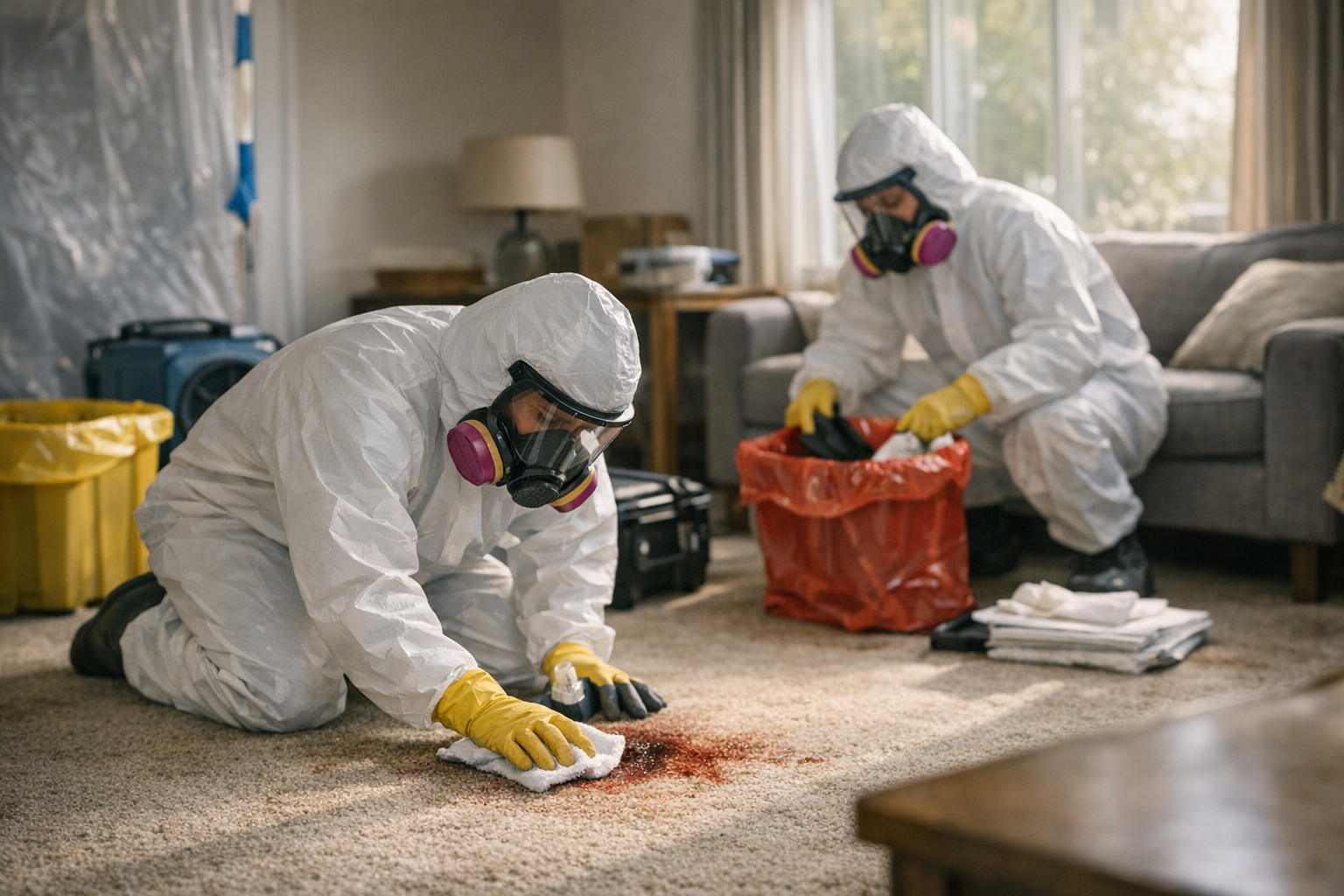
Understanding How Insurance Handles Biohazard Cleanup Costs
Property owners facing biohazard contamination often discover that biohazard cleanup costs can reach $25,000 or more depending on the affected area size and contamination type. The financial burden becomes manageable when insurance covers these expenses, but coverage varies dramatically based on your policy and the contamination source.
Most homeowners assume their standard insurance automatically covers any cleanup situation. This assumption proves costly when dealing with blood, bodily fluids, chemical spills, or infectious materials that require specialized remediation.
Your coverage depends on three critical factors: the contamination cause, your specific policy language, and whether the incident meets your insurer’s definition of a covered peril.
When Standard Homeowners Insurance Covers Biohazard Cleanup
Sudden and accidental incidents typically receive coverage under standard homeowners policies. Insurance companies define these as unexpected events that occur without the policyholder’s intent or negligence.
Covered scenarios include home invasions resulting in blood contamination, accidents causing bodily fluid spillage, or chemical spills from household products. The key requirement is that the contamination stems from a covered peril listed in your policy.
Most policies cover biohazard cleanup when the contamination results from:
- Violent crimes occurring on your property
- Accidental death or serious injury incidents
- Vandalism involving hazardous materials
- Fire damage that creates toxic residue
Coverage Limitations You Need to Know
Standard policies include specific dollar limits for biohazard remediation. These limits range from $10,000 to $50,000 depending on your insurer and policy level.
The coverage applies only to the cleanup itself, not to personal property replacement or additional living expenses during remediation. Some policies require you to use their approved restoration contractors, limiting your choice of cleanup professionals.
Situations Where Insurance Denies Biohazard Cleanup Claims
Insurance companies routinely deny claims for biohazard cleanup when the contamination results from excluded events or circumstances. Insurance coverage gaps become apparent in situations involving gradual contamination or specific excluded perils.
Common denial scenarios include drug-related activities, intentional acts by the policyholder, and contamination that developed over time rather than from a sudden incident. Mold growth, pest infestations, and sewage backups often fall under separate coverage requirements.
Excluded Contamination Sources
Standard homeowners policies exclude coverage for biohazard cleanup related to:
- Illegal drug manufacturing or drug-related activities
- Intentional contamination by the property owner
- Business activities conducted on residential property
- Gradual leaks or seepage that occurred over months or years
- Flood-related contamination without separate flood insurance
Each exclusion carries specific language that insurers interpret strictly. Understanding these exclusions before an incident occurs helps property owners make informed decisions about additional coverage needs.
Commercial Insurance and Biohazard Cleanup Coverage
Commercial properties face different coverage rules and typically higher biohazard cleanup costs due to larger affected areas and stricter regulatory requirements. Business insurance policies address workplace incidents, customer injuries, and operational contamination differently than residential coverage.
General liability insurance covers third-party contamination claims but may not cover cleanup of the business premises itself. Property insurance handles building contamination from covered perils, while workers’ compensation addresses employee-related biohazard incidents.
Industry-Specific Considerations
Healthcare facilities, laboratories, and manufacturing businesses require specialized environmental liability coverage. Standard commercial policies exclude contamination related to the business’s normal operations.
Restaurants face unique challenges with foodborne illness incidents, while retail businesses deal with customer accident scenarios. Each industry requires tailored coverage to address their specific biohazard risks.
Filing Insurance Claims for Biohazard Cleanup
Successful claim filing requires immediate documentation and professional assessment of the contamination. Insurance companies demand detailed evidence of the incident cause, contamination extent, and cleanup necessity.
Contact your insurance company within 24 hours of discovering the contamination. Many policies include notification requirements that void coverage if not met promptly.
Required Documentation Process
Insurance adjusters need specific documentation to process biohazard cleanup claims:
- Incident report from police or emergency responders when applicable
- Professional assessment from certified biohazard cleanup specialists
- Photographic evidence of contamination before any cleanup begins
- Written estimate from licensed restoration professionals
Never begin cleanup work before receiving approval from your insurance adjuster. Starting remediation without authorization can void your coverage and leave you responsible for all expenses.
Working with Insurance Adjusters During the Claims Process
Insurance adjusters evaluate biohazard claims using specific criteria that differ from standard property damage assessments. They focus on contamination source verification, cleanup necessity, and cost reasonableness.
Provide adjusters with multiple estimates from certified professionals to demonstrate competitive pricing. The adjuster may recommend their preferred contractors, but most policies allow you to choose your cleanup provider.
Negotiating Coverage Disputes
Coverage disputes arise when adjusters question the contamination source or cleanup scope. Independent environmental testing strengthens your position by providing objective contamination evidence.
Document all communications with your insurance company in writing. Email follow-ups after phone conversations create a paper trail that proves valuable if disputes escalate to formal review processes.
Additional Coverage Options for Enhanced Protection
Property owners concerned about coverage gaps can purchase endorsements or separate policies that expand biohazard cleanup protection. These additional coverages address specific scenarios excluded from standard policies.
Environmental liability insurance covers contamination from various sources including chemical spills, fuel leaks, and industrial accidents. This coverage applies to both cleanup costs and third-party liability claims.
Specialized Endorsements
Several endorsement options enhance standard policy coverage:
- Ordinance and law coverage pays for upgrades required during restoration
- Additional living expense coverage extends temporary housing during cleanup
- Service line coverage addresses utility-related contamination
- Identity recovery coverage helps with document restoration
Each endorsement carries additional premiums but provides specific protection that standard policies exclude. Evaluate these options based on your property’s unique risk factors and exposure potential.
Finding Qualified Professionals for Insurance Claims
Insurance companies require biohazard cleanup work to meet specific standards and certifications. Choosing qualified professionals protects your coverage and ensures proper remediation that satisfies insurance requirements.
Look for contractors with IICRC certification, OSHA compliance training, and experience handling insurance claims. These credentials demonstrate the technical knowledge and business practices that insurers expect from approved vendors.
Verify that potential contractors carry appropriate licensing, bonding, and liability insurance before allowing them to assess your property. Unqualified providers can compromise your insurance claim and create additional liability exposure.
Protecting Your Coverage and Minimizing Costs
Property owners can take specific steps to protect their insurance coverage and potentially reduce biohazard cleanup costs when incidents occur. Prevention measures and proper maintenance demonstrate responsible property ownership to insurance companies.
Regular property inspections identify potential contamination sources before they become major problems. Address water leaks, ventilation issues, and structural problems promptly to prevent gradual contamination that insurance typically excludes.
Maintain detailed property records including photos, maintenance receipts, and improvement documentation. This information helps establish pre-loss conditions and supports your claim when contamination occurs.
Understanding your policy terms and coverage limits allows you to make informed decisions during emergencies. Review your policy annually and discuss coverage gaps with your insurance agent to identify additional protection needs.
When biohazard contamination affects your property, quick action and proper documentation protect your insurance coverage. Working with qualified professionals who understand insurance requirements helps maximize your claim benefits and ensures proper remediation. Browse disaster cleanup and restoration listings on https://restorationlocator.com to find certified professionals in your area who can handle insurance claims effectively.
Sources
- Insurance Information Institute – What Does Homeowners Insurance Cover
- EPA – A Brief Guide to Mold, Moisture and Your Home
- OSHA – Bloodborne Pathogens Standard