
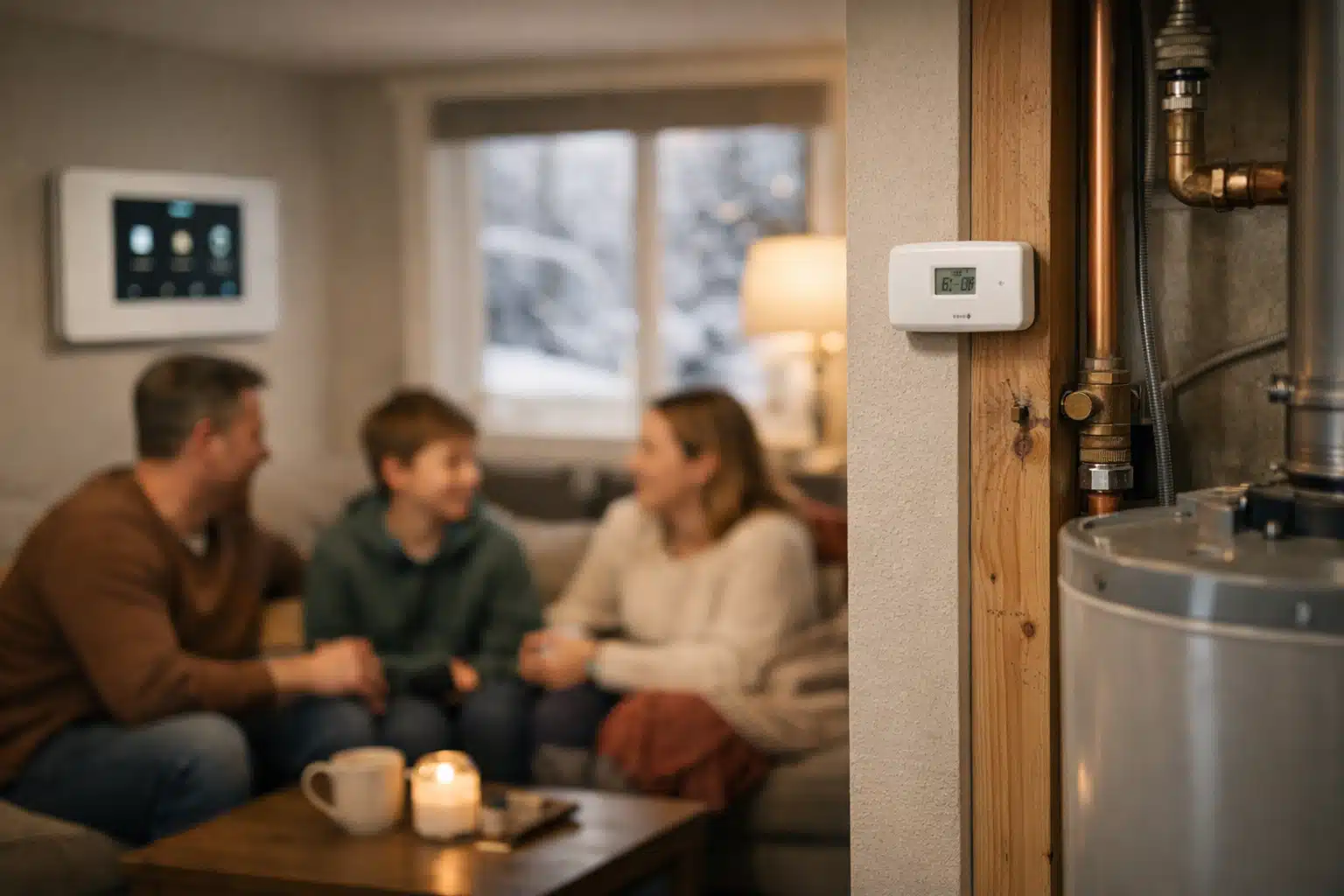
Frozen pipes burst at 2 a.m. in January, and most homeowners have no idea until water reaches the drywall. A standard alarm watches for burglars but ignores the biggest cold-weather threats to your house. A winter home security system closes that gap by monitoring temperature drops, water leaks, and power loss alongside break-ins.
This post breaks down the features that matter in freezing months. You will learn which sensors prevent cold-weather damage, how to compare monitoring plans, and how to find vetted restoration help if something fails.
What Makes a Winter Home Security System Different
A winter home security system is a security setup that adds environmental monitoring for cold-weather risks like frozen pipes, flooding, and furnace failure. It does more than detect intruders. It watches the conditions that cause the most expensive winter claims.
Insurance data backs this up. Frozen pipe claims average over ,000 per incident. A single burst line can release hundreds of gallons before anyone notices.
The right system alerts you before damage spreads. That early warning is the difference between a $50 repair and a gutted basement.
Cold-Weather Threats a Basic Alarm Ignores
- Frozen pipes: Water expands as it freezes, cracking copper and PEX lines.
- Furnace failure: A dead heater during a cold snap drops indoor temps fast.
- Ice dams: Melting snow refreezes at the roof edge, forcing water under shingles.
- Power outages: No power means no heat, no sump pump, and no protection.
Key Features to Look For in Winter Protection
Prioritize systems that monitor temperature and water, not just doors and windows. The best cold-season setups combine both. Here are the features that earn their keep from December to March.
Freeze and Temperature Sensors
Temperature sensors trigger an alert when indoor readings drop below a set point. Place one near pipes in unheated areas like crawl spaces and garages. A 40°F threshold gives you time to act before pipes freeze.
Some sensors text you directly. Others route through a monitoring center that can dispatch help if you are unreachable.
Water Leak Detectors
Water sensors sit on the floor near water heaters, washing machines, and sump pumps. They sound an alarm the moment they detect moisture. Pair them with an automatic shutoff valve to stop flooding at the source.
This combination catches slow leaks and sudden pipe bursts alike. It is one of the highest-value additions for a winter home security system.
Backup Power and Cellular Connection
A battery backup keeps your system running during outages. Cellular monitoring stays online even when internet and landlines fail. Winter storms knock out both, and a hardwired-only system goes dark with them.
Check how long the backup battery lasts. Look for at least 24 hours of standby power.
Smart Thermostat Integration
Modern home protection technology lets your security hub talk to your thermostat. If temperatures fall too low, the system can raise the heat automatically. That prevents frozen pipes while you are away for the holidays.
How to Compare Winter Security Systems Step by Step
Follow this order to avoid overpaying for features you will not use. Match the system to your home’s specific cold-weather weak points first.
- Map your risk zones. Identify unheated areas, exposed pipes, and the sump pump location.
- List required sensors. Count freeze and water sensors based on those zones.
- Verify monitoring type. Decide between self-monitored alerts and 24/7 professional dispatch.
- Confirm backup systems. Check battery life and cellular failover.
- Review contract terms. Compare month-to-month plans against multi-year commitments.
- Test integration. Confirm the hub connects to your thermostat and shutoff valve.
Self-Monitored vs. Professionally Monitored
- Self-monitored: You get the alert and respond yourself. Lower cost, no monthly fee, but you must be reachable.
- Professionally monitored: A center responds and dispatches help. Monthly fee applies, but protection continues when you cannot answer your phone.
For winter travel, professional monitoring makes more sense. A frozen pipe at your empty cabin needs a response you cannot give from an airport.
What to Do When Winter Damage Happens Anyway
No system stops every disaster. A sensor buys you minutes, but burst pipes and ice dams still flood homes. Your next move decides how much you spend on repairs.
Shut off the main water valve and kill power to affected areas. Document the damage with photos before anyone touches it. Then call a water damage restoration company fast, because standing water grows mold within 48 hours.
Finding Restoration Help Through the Directory
Restoration Locator lists Disaster Cleanup & Restoration providers by location and specialty. When a sensor alert turns into real flooding, you need vetted help without hours of searching.
- Filter listings by service type, such as water extraction or mold remediation.
- Sort by location to find crews that reach you quickly in a storm.
- Check reviews on each provider before you commit.
Having that list bookmarked before winter saves you panicked searching mid-emergency. The cleanup clock starts the moment water hits the floor.
Budgeting for a Winter-Ready System
Expect hardware costs between $200 and $600 for a sensor kit with freeze and water detection. Monthly monitoring runs $20 to $50 depending on features. Automatic shutoff valves add $150 to $500 installed.
Weigh that against a single $10,000 water claim and rising premiums afterward. The math favors prevention in most cold-climate homes.
Conclusion
A winter home security system protects against the cold-weather threats a basic alarm misses: frozen pipes, leaks, and power loss. Match sensors to your home’s risk zones, confirm backup power, and decide on monitoring before the first freeze. If damage still happens, fast restoration limits the cost.
Browse Disaster Cleanup & Restoration listings at https://restorationlocator.com and find a vetted provider near you before winter hits.